Wiki » History » Version 42
« Previous -
Version 42/163
(diff) -
Next » -
Current version
Marta Martins Filipe, 26/05/2026 10:24
Obstech - Tele-CTG: Conceção e prototipagem dum serviço de telemedicina em obstetrícia
Unidade Curricular de Telemedicina e e-Saúde
Faculdade de Engenharia da Universidade do Porto
Nome dos autores:
Inês Vasconcelos - up202314982
Maria Videira - up202510611
Marta Filipe - up20250464
0. Abstract
The Obstech – Tele-CTG project aims to conceive and prototype an innovative telemedicine service in the field of obstetrics, focused on remote cardiotocography (CTG) monitoring during pregnancy. Cardiotocography is an essential clinical exam that simultaneously records fetal heart rate and uterine activity, traditionally performed in hospital settings.
This project proposes a hybrid model composed of a portable signal acquisition device and an integrated digital platform with two distinct interfaces: one designed for the pregnant woman (patient-facing) and another for healthcare professionals (clinical-facing). The approach is centered on user interviews and functional mockup development to validate the system's utility and feasibility.
The solution addresses a clear gap in the current market, where existing solutions are either highly reliable but hospital-bound, or accessible but lacking clinical integration and intelligent data analysis. Obstech bridges these two extremes by combining clinical-grade CTG monitoring with a patient-centered digital experience.
Keywords: Telemedicine, Obstetrics, Cardiotocography, Remote Monitoring, eHealth, Prototyping
1. Introduction
1.1 What is Obstech – Tele-CTG?
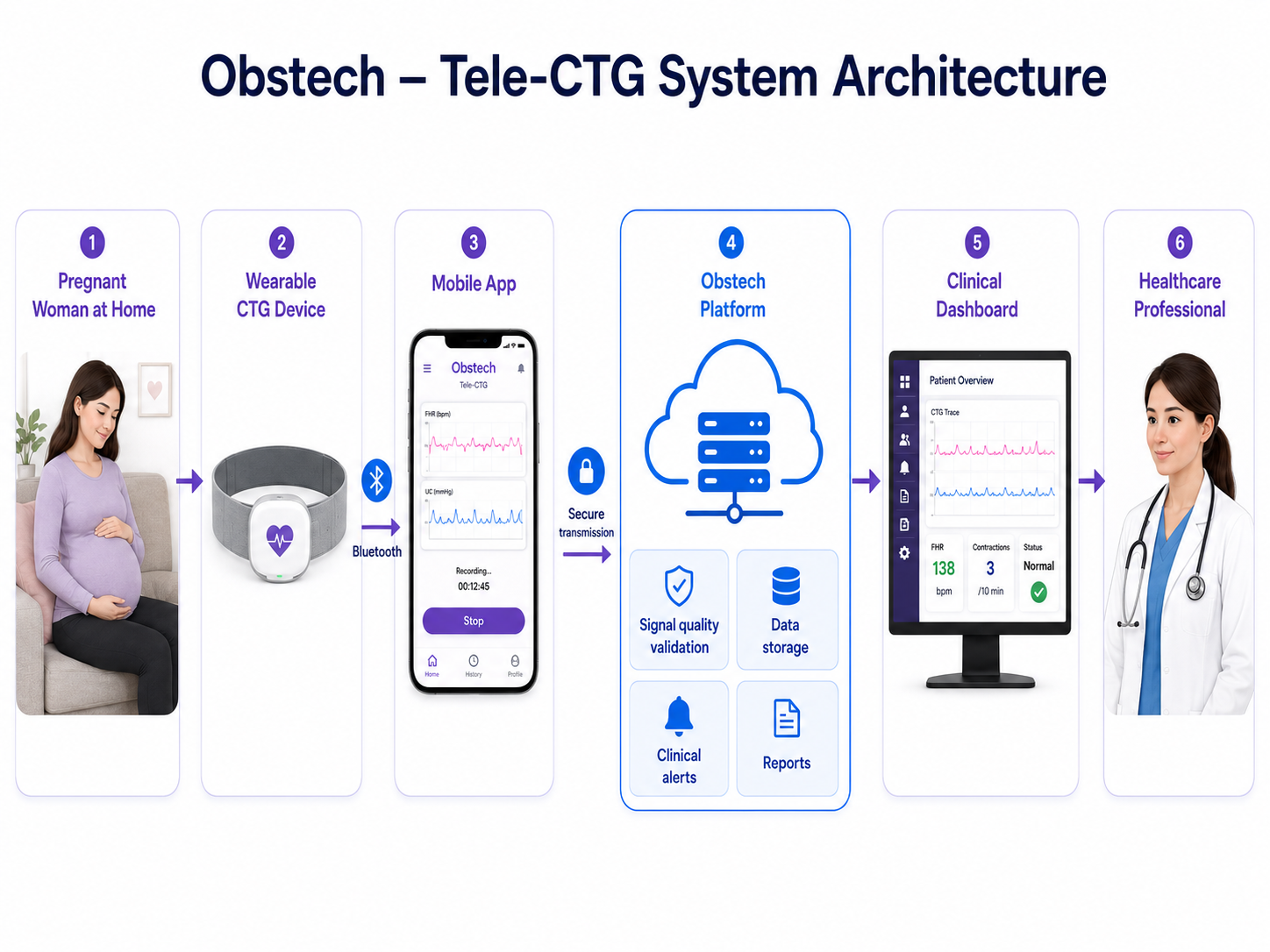
Obstech – Tele-CTG is a telemedicine service designed for remote fetal monitoring through cardiotocography (CTG) in home environments. It consists of a portable or wearable device that captures fetal heart rate and uterine activity signals, combined with a digital platform that transmits and displays this data securely to healthcare providers.
The system operates on a hybrid model: the pregnant woman uses the device at home while her clinical data is continuously available to her medical team through a dedicated professional interface. This eliminates the need for frequent hospital visits while maintaining the clinical quality and continuity of fetal monitoring.
Rather than being only a device or only a mobile application, Obstech is conceived as an integrated telemedicine service that connects home-based fetal monitoring with clinical follow-up, combining signal acquisition, patient engagement and professional decision support.
1.2 The Concept of Remote CTG Monitoring
Cardiotocography CTG is the simultaneous recording of the fetal heart rate (FHR) and uterine contractions. It is a standard clinical tool used to assess fetal well-being during pregnancy and labor. In its traditional form, CTG requires the pregnant woman to visit a hospital or clinic, where sensors are placed on the abdomen and connected to a monitor.
Remote CTG monitoring refers to the use of portable or wearable sensors to perform CTG outside the clinical setting, typically at home, with data transmitted electronically to healthcare providers. This approach enables continuous or on-demand monitoring, reducing the burden on hospital services and improving access for patients in remote or underserved areas.
In this context, remote CTG monitoring represents a relevant application of telemedicine, as it enables clinical data to be collected outside the hospital while remaining accessible to healthcare professionals. This supports a more continuous, accessible and patient-centered model of pregnancy follow-up.
1.3 Project Motivation and Objectives
The motivation for this project stems from the clear limitations of current CTG monitoring practice:- Frequent and inconvenient hospital visits for routine monitoring;
- Episodic rather than continuous fetal surveillance;
- Overloaded obstetrics departments;
- Limited autonomy for the pregnant woman;
- Poor access for patients in rural or geographically isolated areas.
These limitations create the need for a hybrid solution capable of reducing unnecessary hospital visits while preserving clinical supervision and data quality.
The main objectives of Obstech – Tele-CTG are:- Develop a remote CTG monitoring solution usable in a home environment;
- Review the state of the art and identify gaps in existing solutions;
- Contact relevant stakeholders (pregnant women, obstetricians, nurses) for requirements gathering;
- Design functional mockups of both the patient and clinical interfaces;
- Validate the proposed system's utility, usability, and clinical viability.
2. Market Assessment Study
2.1 Review of Existing Solutions
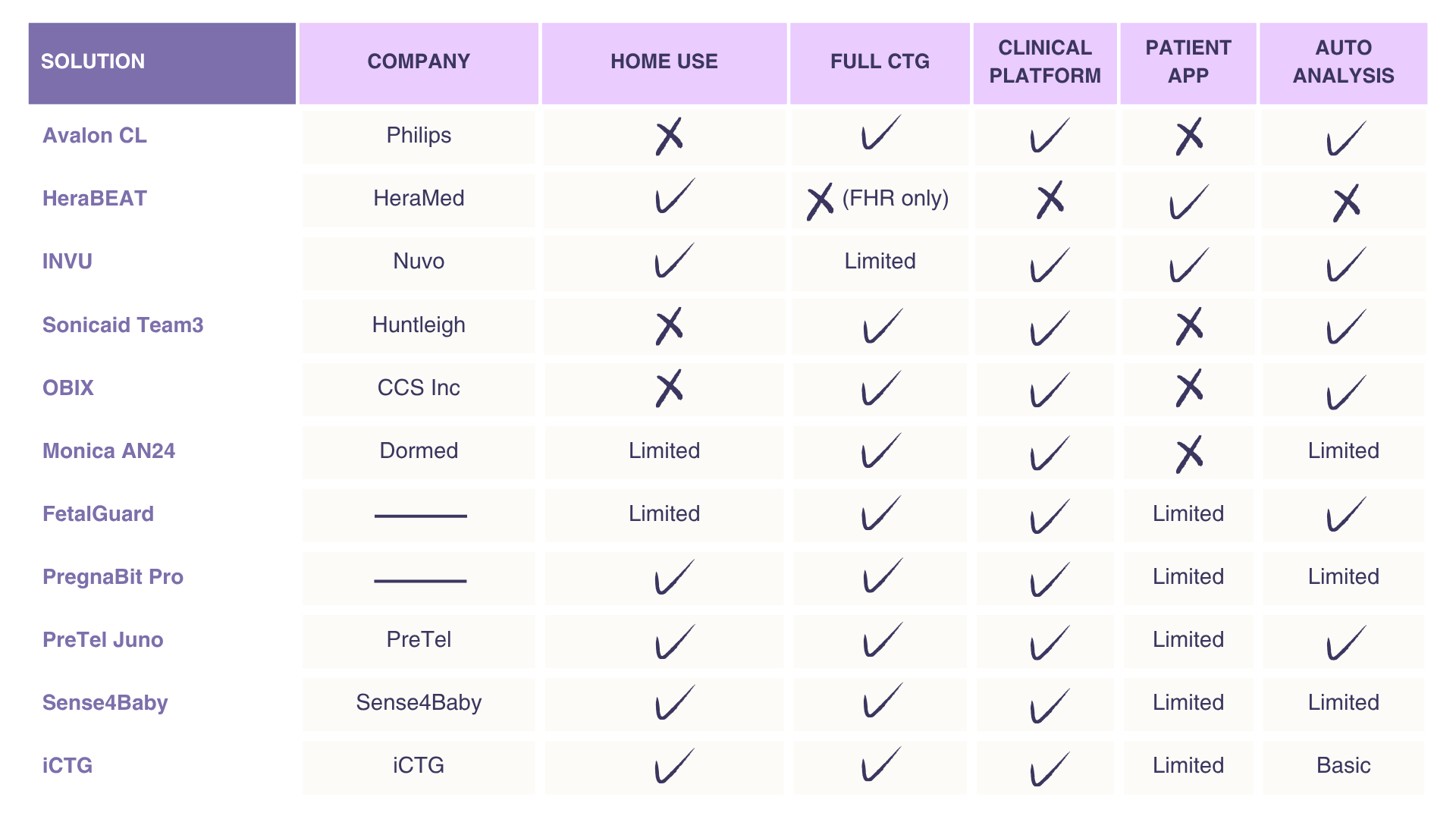
A review of existing fetal and maternal monitoring solutions was conducted in order to understand the current technological landscape and identify opportunities for differentiation. The analysed solutions included hospital-based CTG systems, portable fetal monitoring devices, wearable technologies and remote monitoring platforms.
The comparison was based on five criteria considered relevant for the Obstech concept: home use capability, full CTG measurement, clinical interface, patient interface and automatic data analysis. These criteria were selected because they represent the main dimensions required for a complete telemedicine solution in obstetrics: accessibility, clinical value, professional integration, patient-centered design and decision-support potential.

The comparative analysis shows that existing solutions tend to be divided into two main groups. Hospital-centered systems, such as Avalon CL, Sonicaid Team3 and OBIX, provide strong clinical reliability and professional integration, but are mainly designed for use in clinical environments. In contrast, home-based or portable solutions, such as HeraBEAT, PregnaBit Pro, Sense4Baby, iCTG, INVU and PreTel Juno, improve accessibility but often present limitations regarding full CTG acquisition, patient interface design, intelligent analysis or integration with clinical workflows.
This analysis confirms that there is still space for a hybrid solution capable of combining home accessibility with clinical robustness and a meaningful patient-facing experience.
2.2 Analysis of Available Apps
Beyond dedicated hardware systems, several mobile applications exist for pregnancy monitoring. These can be broadly grouped into three categories:- Consumer wellness apps (e.g., baby heartbeat apps): These use the smartphone microphone to detect fetal sounds. They lack clinical accuracy and are not validated for medical use.
- Companion apps for medical devices: Applications paired with CTG devices (e.g., HeraBEAT app, PregnaBit app) that display data from dedicated sensors. These have better accuracy but typically offer limited clinical integration and a basic user experience.
- Hospital platform apps: Web-based or mobile interfaces for clinical staff to access patient monitoring data remotely (e.g., OBIX, Sonicaid). These are clinically robust but are not designed for patient use.
A key finding across all app categories is the consistent absence of a well-designed, patient-centered interface that makes clinical data meaningful and accessible to the pregnant woman without requiring medical expertise.
2.2 Analysis of Available Apps
The market analysis reveals a consistent pattern: existing solutions cluster at opposite ends of a spectrum. Clinical systems offer high reliability but require hospital attendance; home devices offer convenience but lack clinical depth and integration.
The identified gaps that Obstech aims to address are:- No solution combines full CTG monitoring (FHR + uterine activity) in the home setting with a strong clinical platform;
- Patient-facing interfaces are universally underdeveloped — data is displayed without meaningful context for the pregnant woman;
- Automatic analysis and intelligent alerting is either absent or limited in home-use solutions;
- No solution offers a true hybrid model with continuous bidirectional communication between the patient and the clinical team;
- Digital pregnancy records (a unified 'digital pregnancy booklet') are absent from all reviewed solutions.
These gaps define the innovation space for Obstech and directly inform its differentiating features.
3. Structure
3.1 Requirements Gathering
Requirements for the Obstech system were gathered through a combination of literature review, analysis of existing solutions, and direct contact with end users and healthcare professionals. The requirements gathering process followed an iterative approach, with initial requirements refined based on stakeholder feedback.
Requirements were classified into functional requirements (what the system must do) and non-functional requirements (how the system must perform), and further divided by interface: patient-facing and clinician-facing.
Key functional requirements identified:- Real-time transmission of CTG data (FHR + uterine activity) from home to clinical platform;
- Patient interface: simplified CTG summaries, digital pregnancy booklet, gestational timeline, exam history;
- Clinical interface: full CTG traces, structured patient history, report generation, multi-patient dashboard, alert system;
- Secure and encrypted data storage and transmission (GDPR compliant);
- Interoperability with existing hospital systems (HL7/FHIR standards).
3.2 Interviews and Iterations
As Obstech is a user-centered telemedicine solution, stakeholder involvement was considered essential during the conception and prototyping phase. The main purpose of the interview process was to validate the relevance of the problem, identify practical needs from both patient and clinical perspectives, and refine the functional requirements of the proposed system.
A qualitative exploratory approach was adopted, based on semi-structured interviews with two main stakeholder groups: pregnant women or recent mothers, representing the patient perspective, and healthcare professionals involved in pregnancy monitoring, representing the clinical perspective. This method was selected because it allows participants to freely describe their experiences, concerns and expectations, while still ensuring that key topics are addressed consistently across interviews.
The interviews focused on five main dimensions: current experience with CTG monitoring, perceived difficulties associated with hospital-based monitoring, willingness to use a remote CTG solution, expected functionalities in a patient-facing application, and clinical requirements for a professional monitoring platform. Questions were adapted according to the participant profile, with patients being asked mainly about usability, reassurance and communication, while healthcare professionals were asked about clinical workflow, signal reliability, alerts, data interpretation and patient safety.
All quotes presented in this section are anonymized and translated into English where necessary, preserving the meaning of the original statements. The quotes are representative excerpts from the stakeholder feedback collected during the exploratory validation process.
From the patient perspective, the feedback confirmed that CTG monitoring is generally perceived as clinically important, but also associated with inconvenience, anxiety and dependency on hospital availability. Participants valued the possibility of performing monitoring at home, particularly if the system remained connected to healthcare professionals and did not place the responsibility of clinical interpretation on the pregnant woman. A recurring concern was that medical data should be presented in a simple and reassuring way, avoiding technical terminology that could generate unnecessary anxiety.
One participant described this need as follows:
“When I do an exam, I do not necessarily need to understand every medical detail. What I really want to know is whether everything seems normal and whether my doctor has access to the result.”
Another participant emphasized the burden of repeated hospital visits:
“Near the end of pregnancy, going to the hospital several times can become tiring and stressful. If part of that monitoring could be done safely at home, it would make the process much easier.”
These findings directly influenced the design of the patient-facing application. As a result, the app was designed to prioritize a simple dashboard, plain-language CTG summaries, pregnancy progression, exam history, notifications and a digital pregnancy booklet. The patient interface deliberately avoids displaying complex raw clinical traces as the main element. Instead, it presents summarized and contextualized information, while ensuring that complete data remains available to the healthcare team.
From the clinical perspective, healthcare professionals recognized the potential of remote CTG monitoring to improve accessibility and reduce unnecessary hospital visits, especially for pregnant women requiring regular follow-up or living far from healthcare facilities. However, they also stressed that remote monitoring should not compromise clinical rigor. The professional interface must therefore provide complete CTG traces, signal quality indicators, patient history, previous monitoring sessions and clear alert prioritization.
One healthcare professional highlighted this distinction:
“For the patient, the information should be simple. For the clinician, it cannot be simplified too much. We need access to the complete CTG trace, the clinical context and the evolution over time.”
Another important concern was related to signal quality and false alarms:
“In remote monitoring, signal quality is critical. Before generating an alert, the system must be able to distinguish between a real clinical concern and a poor-quality recording.”
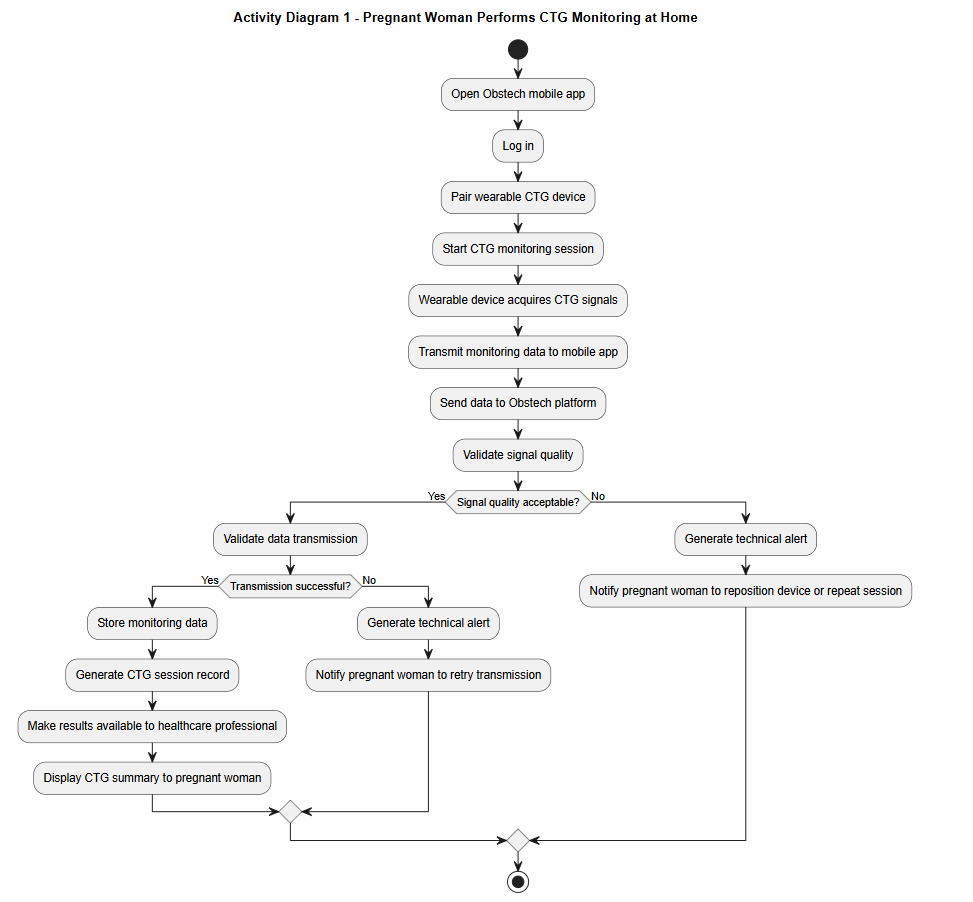
This feedback reinforced the need to include signal quality validation as a core system functionality. Consequently, the Obstech workflow was refined to include technical validation before clinical interpretation. Poor signal acquisition, incomplete transmission or device connection problems are treated as technical alerts, while abnormal fetal heart rate patterns or concerning uterine activity are treated as clinical alerts.
Healthcare professionals also emphasized that automatic analysis should support, but never replace, clinical decision-making. Therefore, the system was positioned as a clinical decision-support tool rather than an autonomous diagnostic system.
This was summarized by one professional as follows:
“The platform can help us prioritize cases and detect patterns faster, but the final interpretation must always remain with the healthcare professional.”
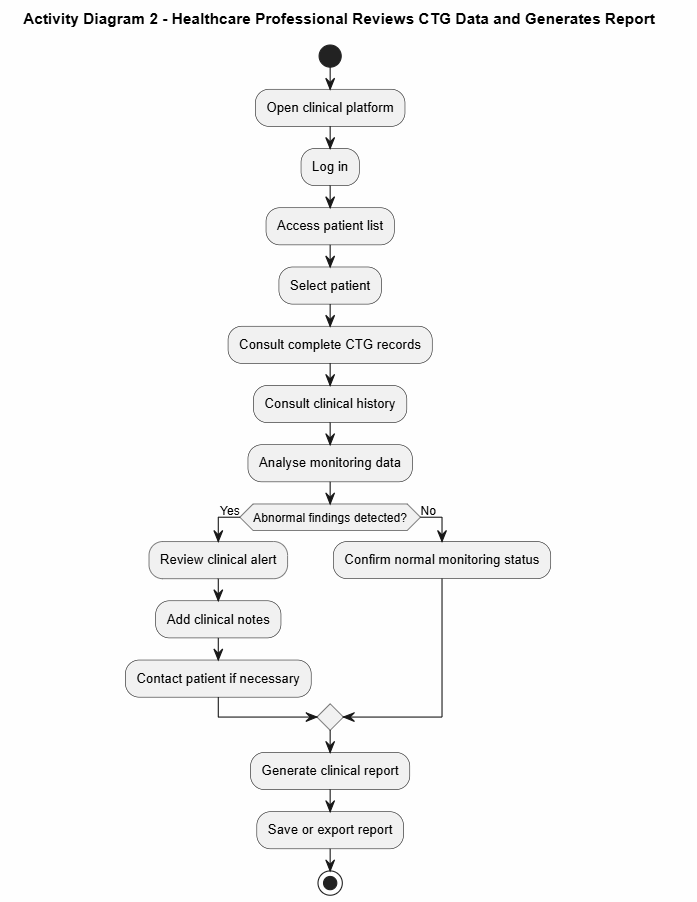
The interviews also contributed to the refinement of the clinical platform. Initially, the concept was mainly focused on CTG visualization and report generation. After the feedback, additional features were reinforced, including multi-patient monitoring, structured patient history, alert categorization, clinical notes, patient contact and trend analysis across multiple CTG sessions. These elements were considered important to integrate the solution into a realistic clinical workflow.
The concept of the digital pregnancy booklet was also validated during the interviews. Patients considered it useful to have pregnancy-related information centralized in a single place, including CTG summaries, appointments, clinical notes and pregnancy evolution. This feature was therefore maintained as one of the differentiating elements of Obstech, since many existing solutions focus mainly on monitoring data and do not provide a complete patient-centered pregnancy record.
Based on the interview feedback, the mockups were iteratively refined. The main changes included simplifying the language used in the patient app, improving the visibility of the latest CTG result, adding clearer navigation to the pregnancy booklet, reinforcing notifications and messages, and expanding the clinical dashboard to include alert status, patient history and monitoring trends. These iterations helped align the prototype with the expectations of both end users and healthcare professionals.
The main requirements refined through the interview process were:
- The patient interface must present information in simple, reassuring and non-technical language;
- The clinical platform must provide access to complete CTG traces and detailed patient history;
- Signal quality must be validated before data interpretation;
- Alerts must be separated into technical alerts and clinical alerts;
- The system must support secure communication between the pregnant woman and the healthcare team;
- The digital pregnancy booklet should centralize pregnancy evolution, exams and relevant clinical information;
- Automatic analysis should support clinical prioritization without replacing professional judgment;
- The solution must be intuitive enough for home use while maintaining clinical reliability.
Overall, the interview process confirmed the relevance of the Obstech value proposition. The findings showed that the proposed solution addresses not only a logistical problem, related to hospital visits and access to monitoring, but also an emotional and informational need, related to reassurance, autonomy and continuity of care during pregnancy. At the same time, the clinical feedback reinforced the importance of maintaining data quality, professional oversight and integration into healthcare workflows.
Therefore, the interviews validated the hybrid positioning of Obstech: a remote CTG monitoring solution that combines home-based accessibility, a patient-centered mobile application and a clinically robust platform for healthcare professionals.
3.3 Final Features and Specifications
Based on the requirements gathering process and interview iterations, the final feature set for the Obstech prototype is defined as follows:
Patient Interface (App):- Digital pregnancy booklet — unified view of all pregnancy information;
- CTG session results displayed in plain language with visual summaries;
- Gestational timeline showing week-by-week pregnancy progression;
- Exam history and results archive;
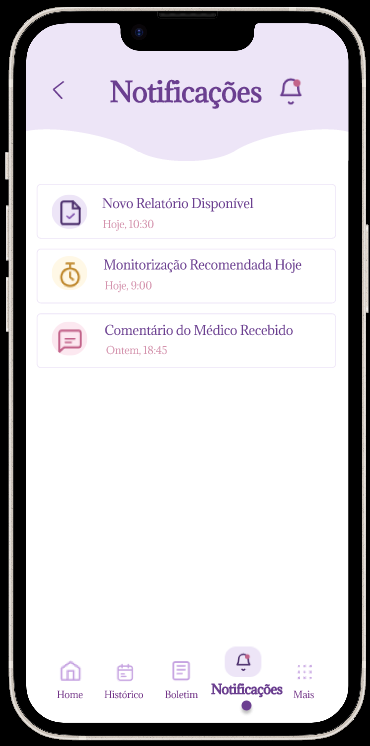
- Push notifications for alerts or messages from the clinical team;
- Secure in-app messaging with the healthcare provider.
- Multi-patient dashboard with real-time monitoring status;
- Full CTG trace visualization (cardiotocogram viewer);
- Structured clinical history per patient;
- Automated report generation (exportable PDF);
- Alert system for values outside clinical thresholds;
- Trend analysis and comparison of CTG sessions over time;
- Clinical decision support (pattern flagging, risk indicators).
3.4 Use Cases
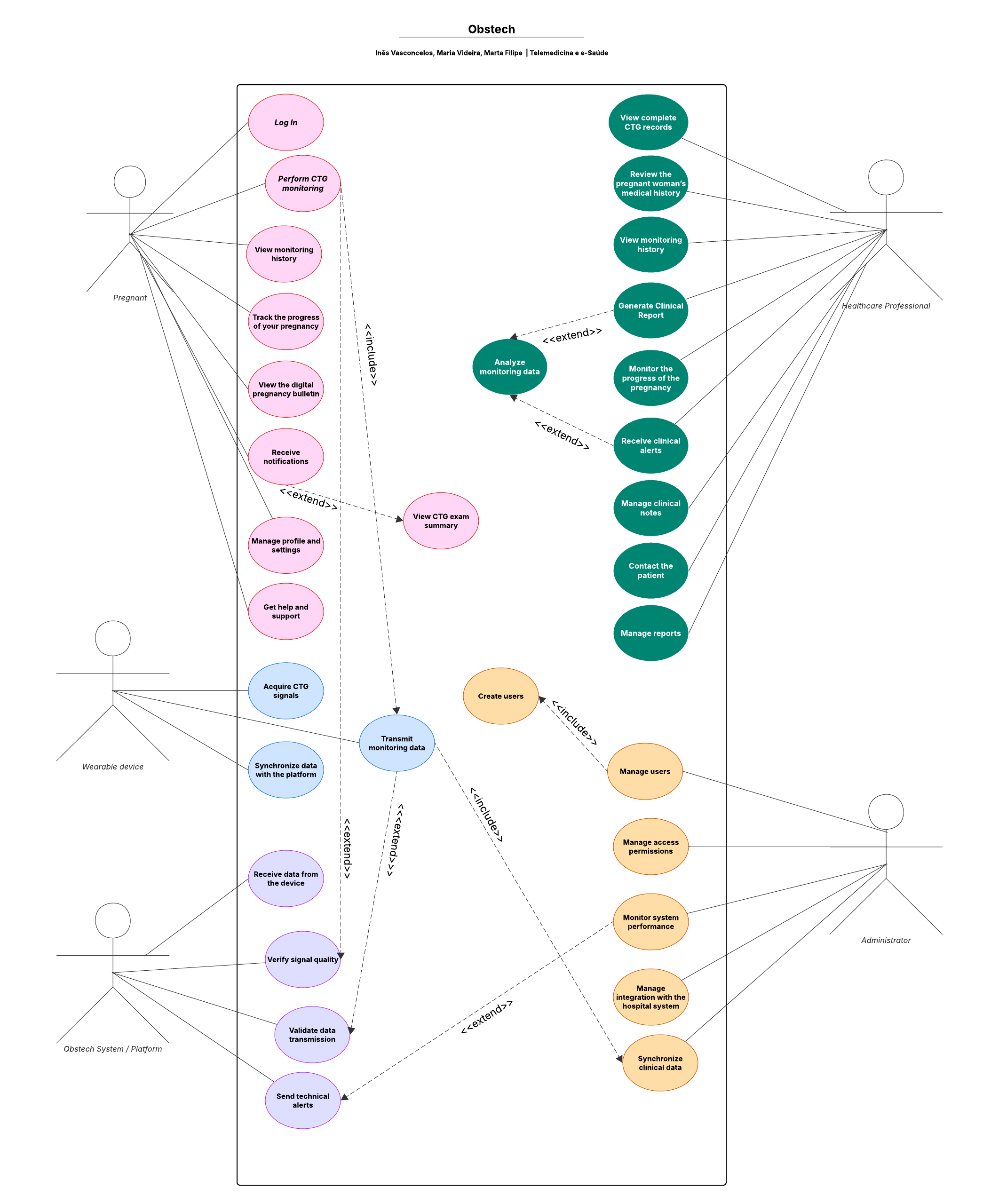
This section presents the use cases identified for the Obstech – Tele-CTG system. The use case diagram illustrates the interactions between the different system actors and the functionalities provided by the platform, offering a clear and structured view of the project's functional requirements.
3.4.1 System Actors
The following actors were identified:
- Pregnant Woman — primary user of the mobile interface, who performs CTG monitoring at home, consults results and communicates with the clinical team.
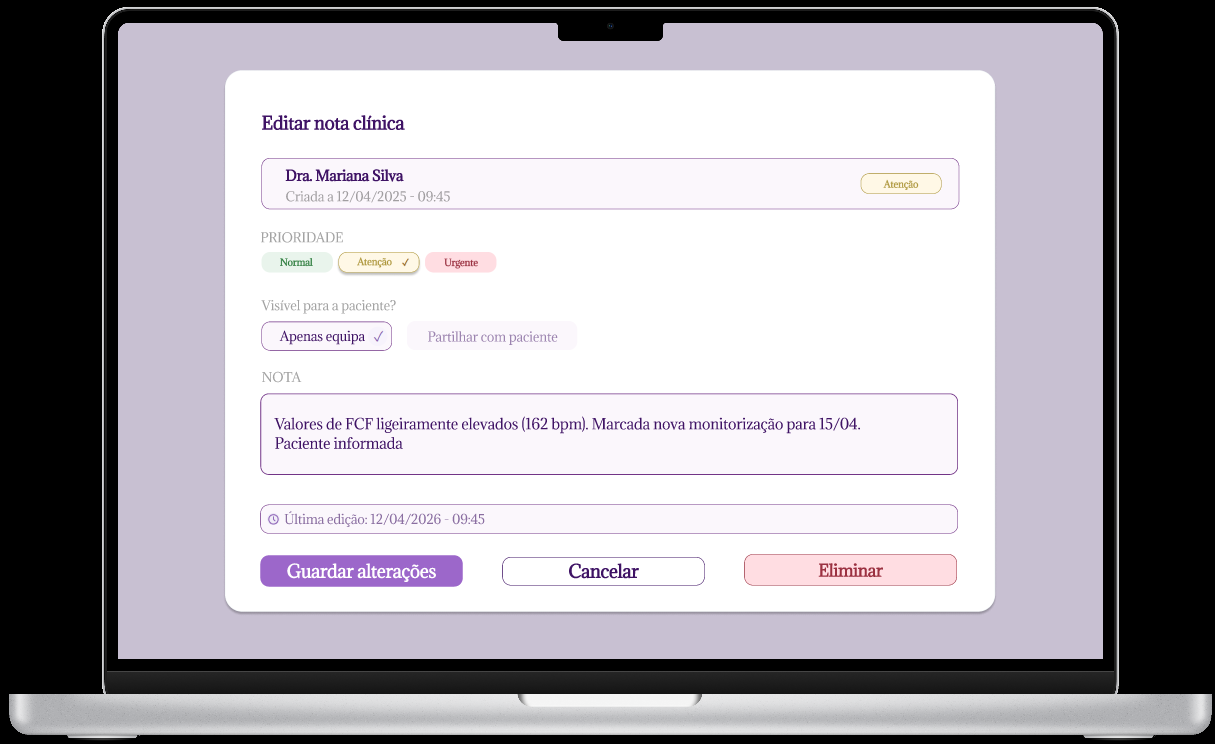
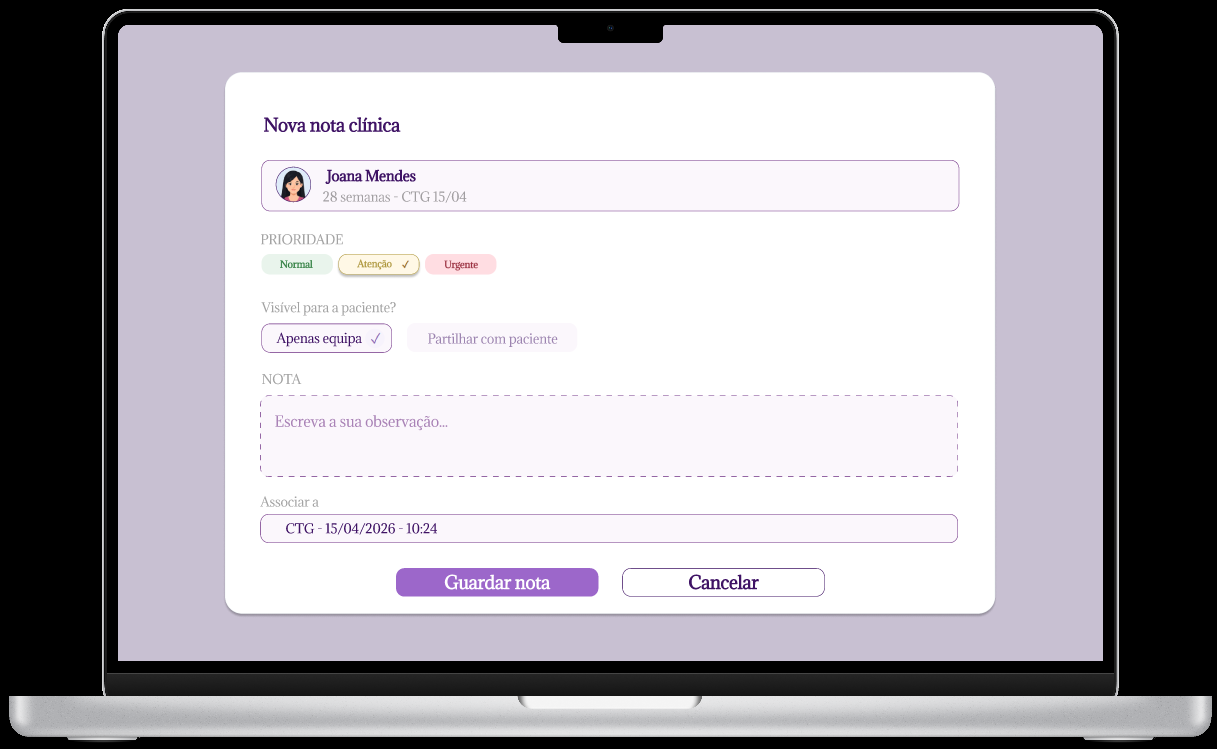
- Healthcare Professional — physician or nurse who monitors patients, analyses monitoring data, generates clinical reports, and manages notes and alerts.
- Wearable Device — non-human actor responsible for acquiring CTG signals and transmitting them to the platform.
- Obstech System / Platform — non-human actor that processes, validates and stores received data, and generates automatic alerts.
- Administrator — responsible for user management, permissions, and integration with external hospital systems.
3.4.2 Use Case Diagram
Figure 1 – Use case diagram of the Obstech – Tele-CTG system
3.4.3 Detailed Use Case Descriptions
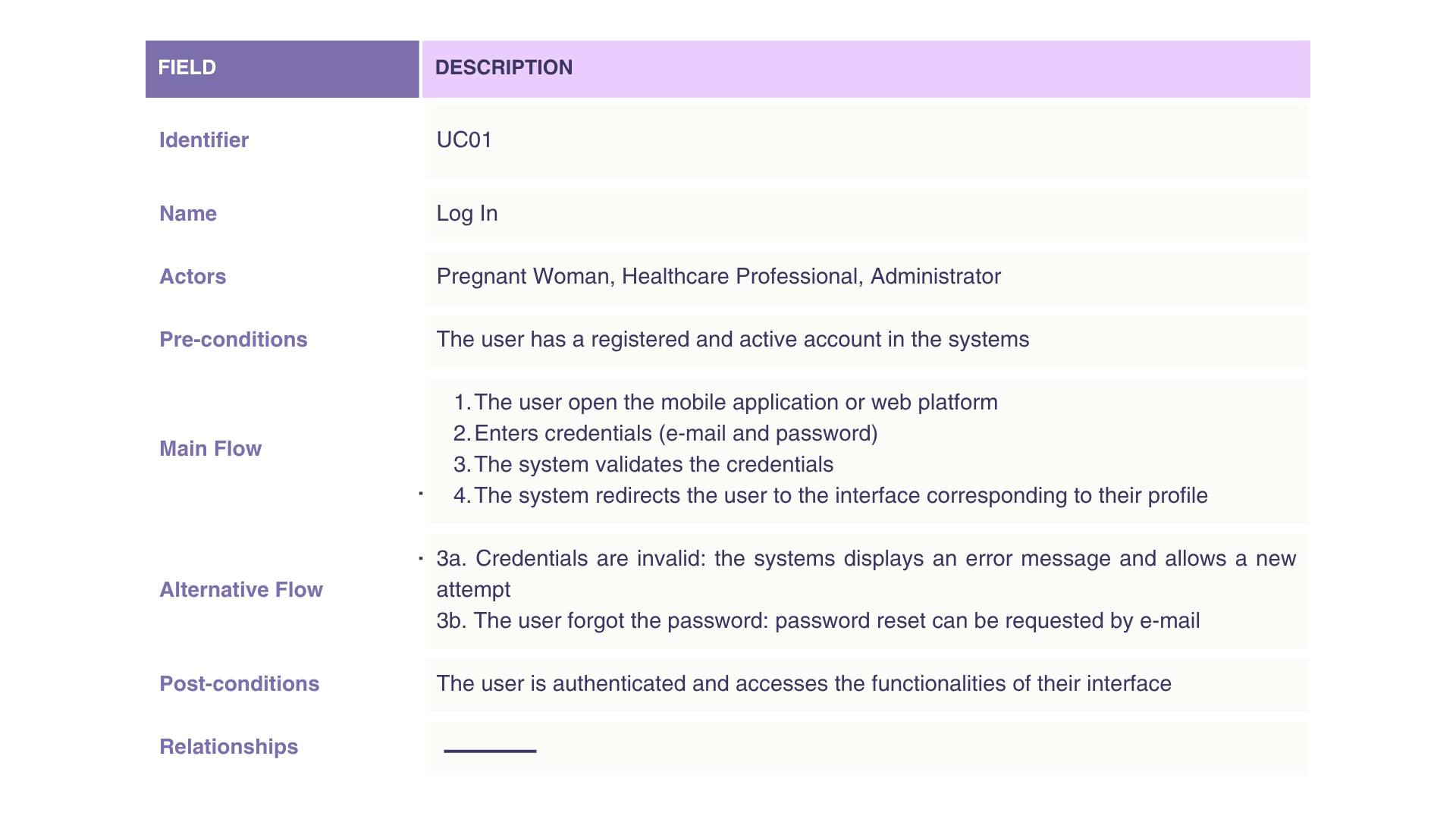
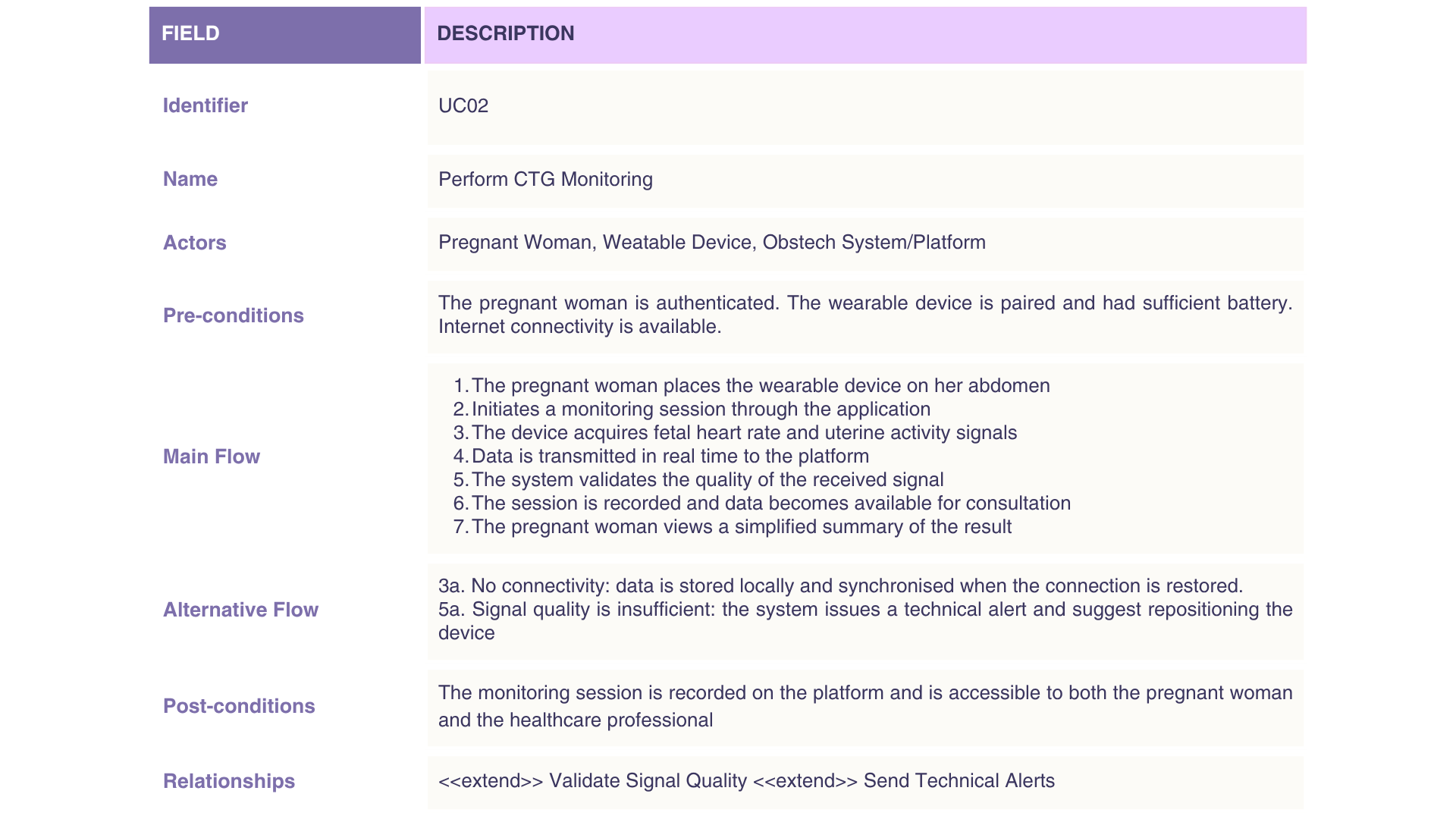
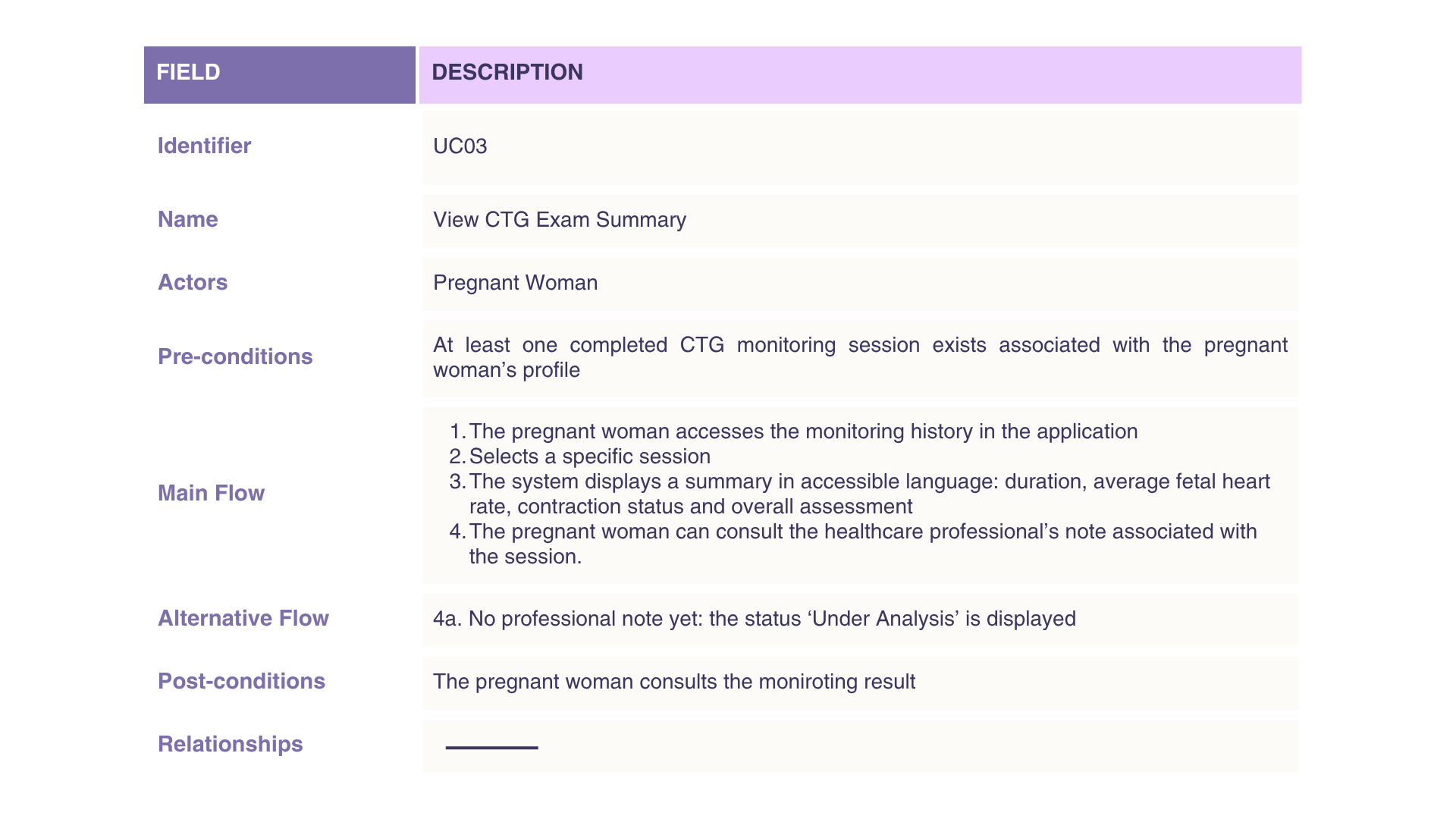
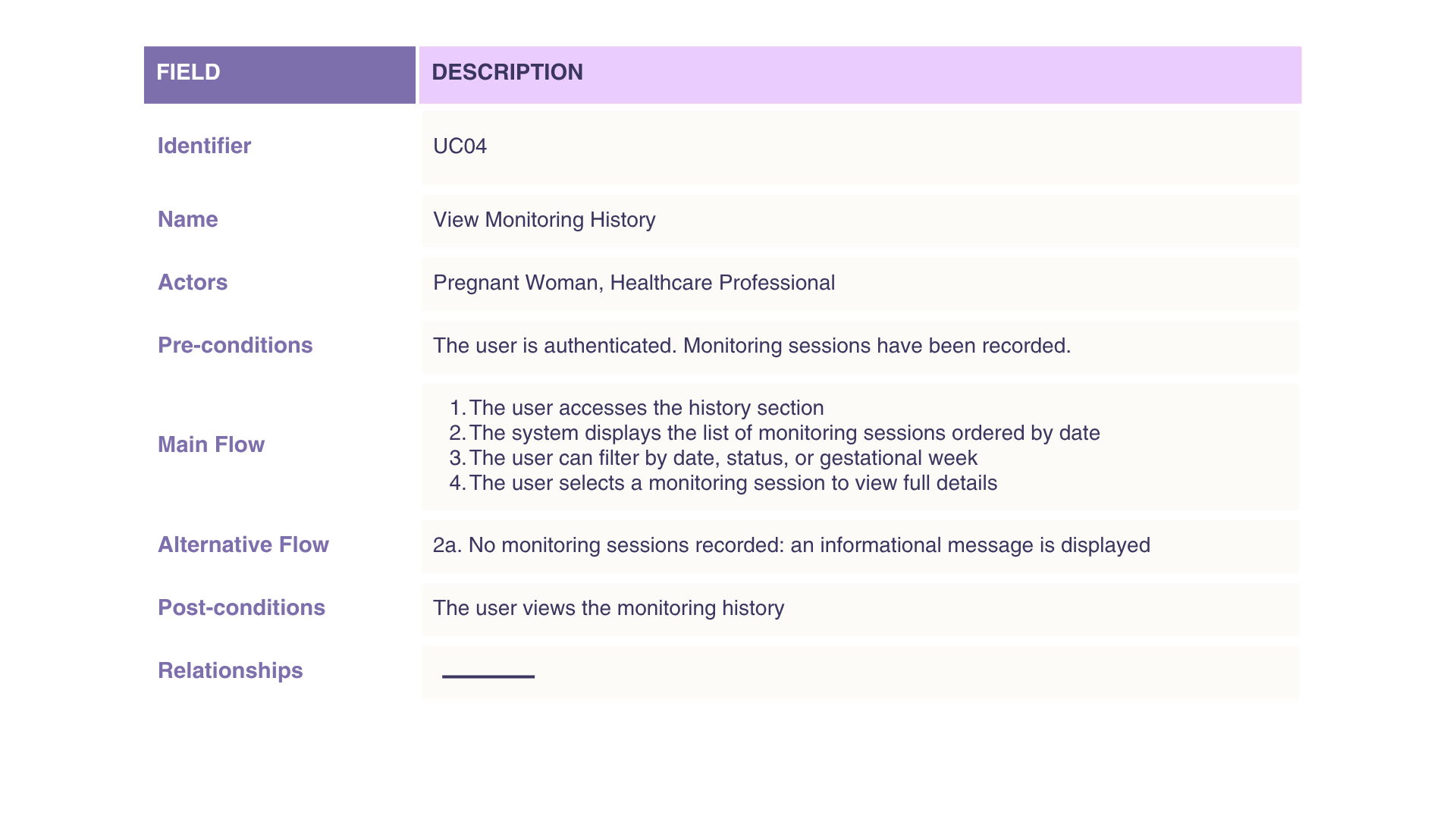
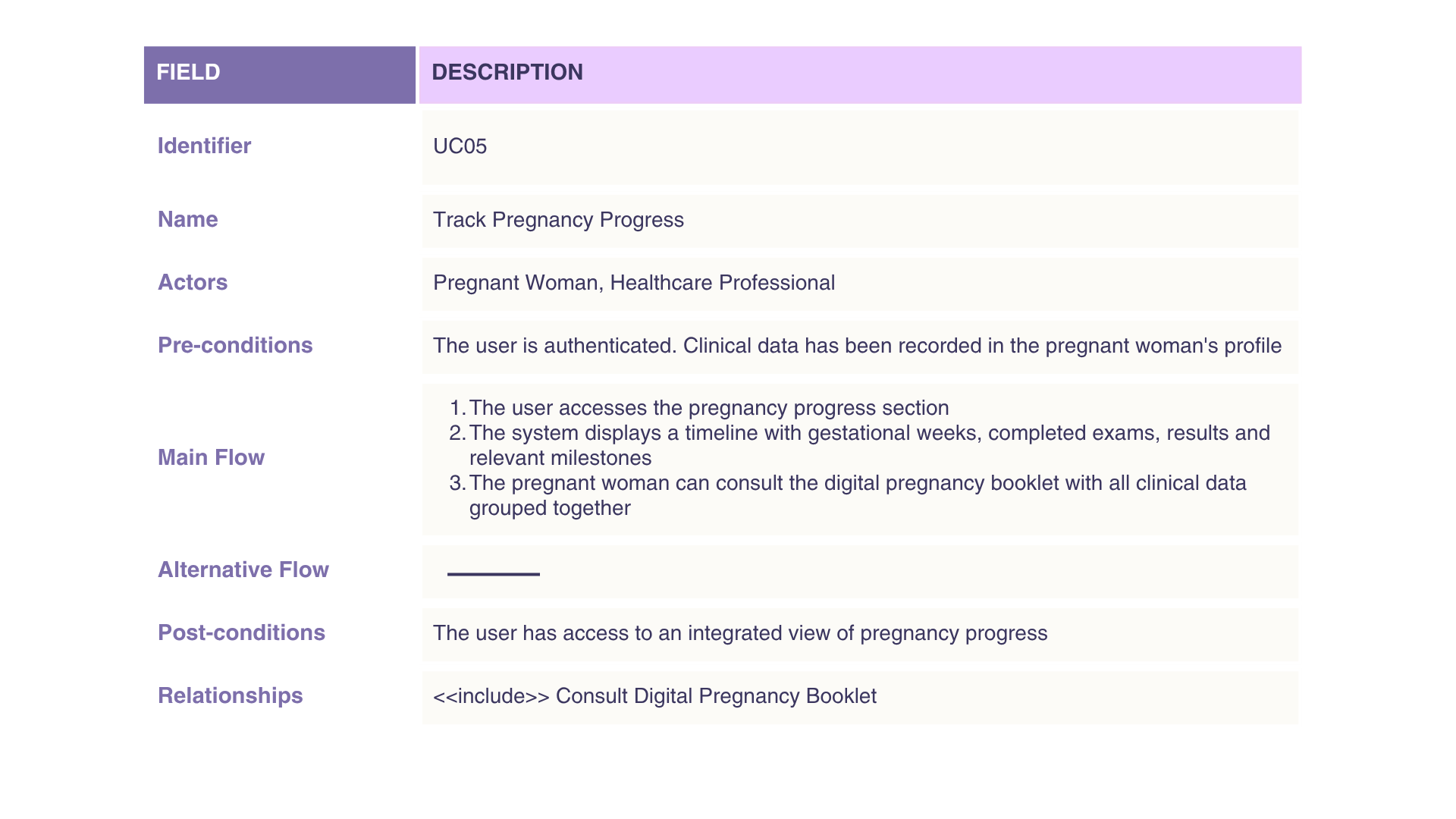
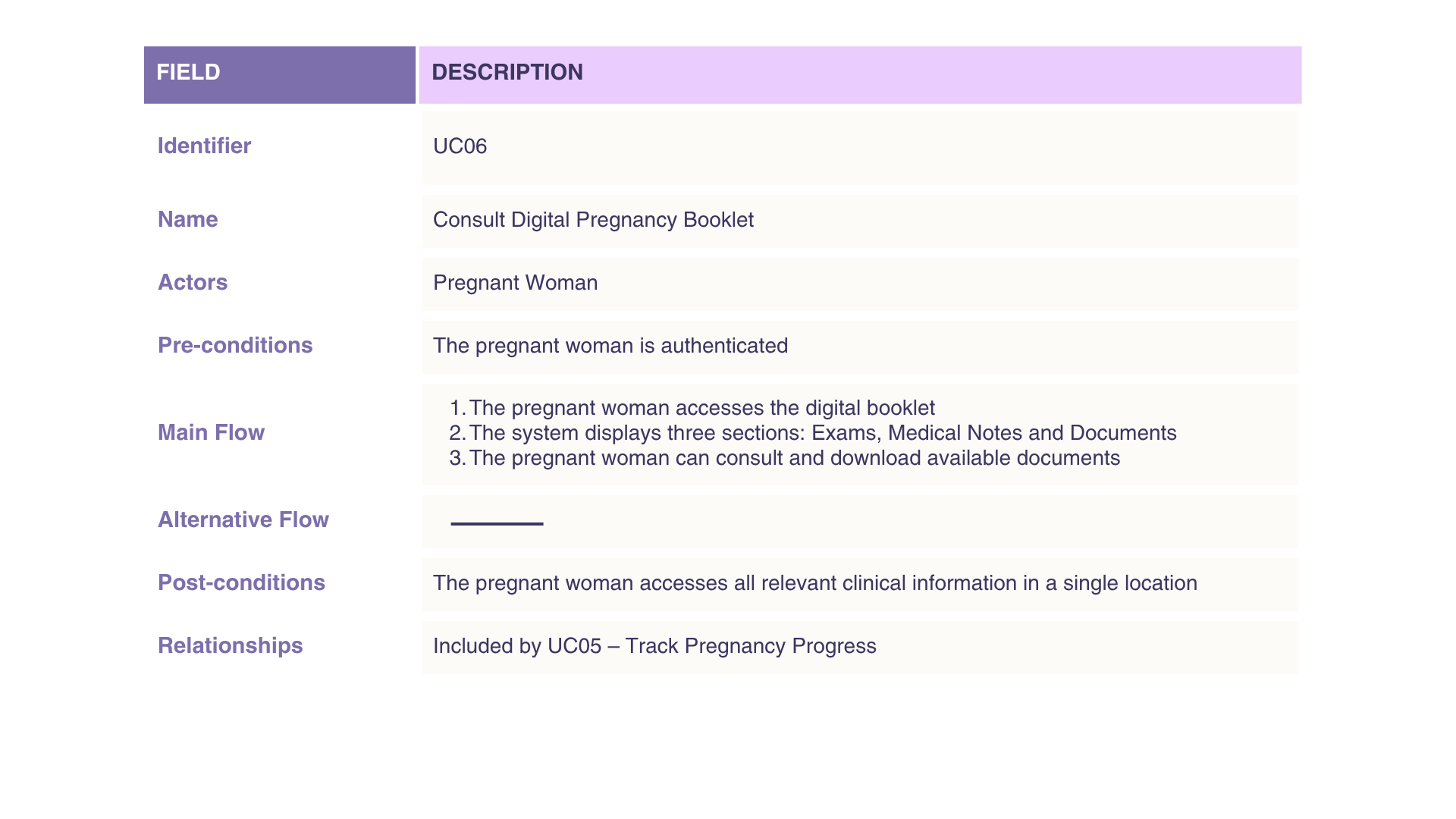
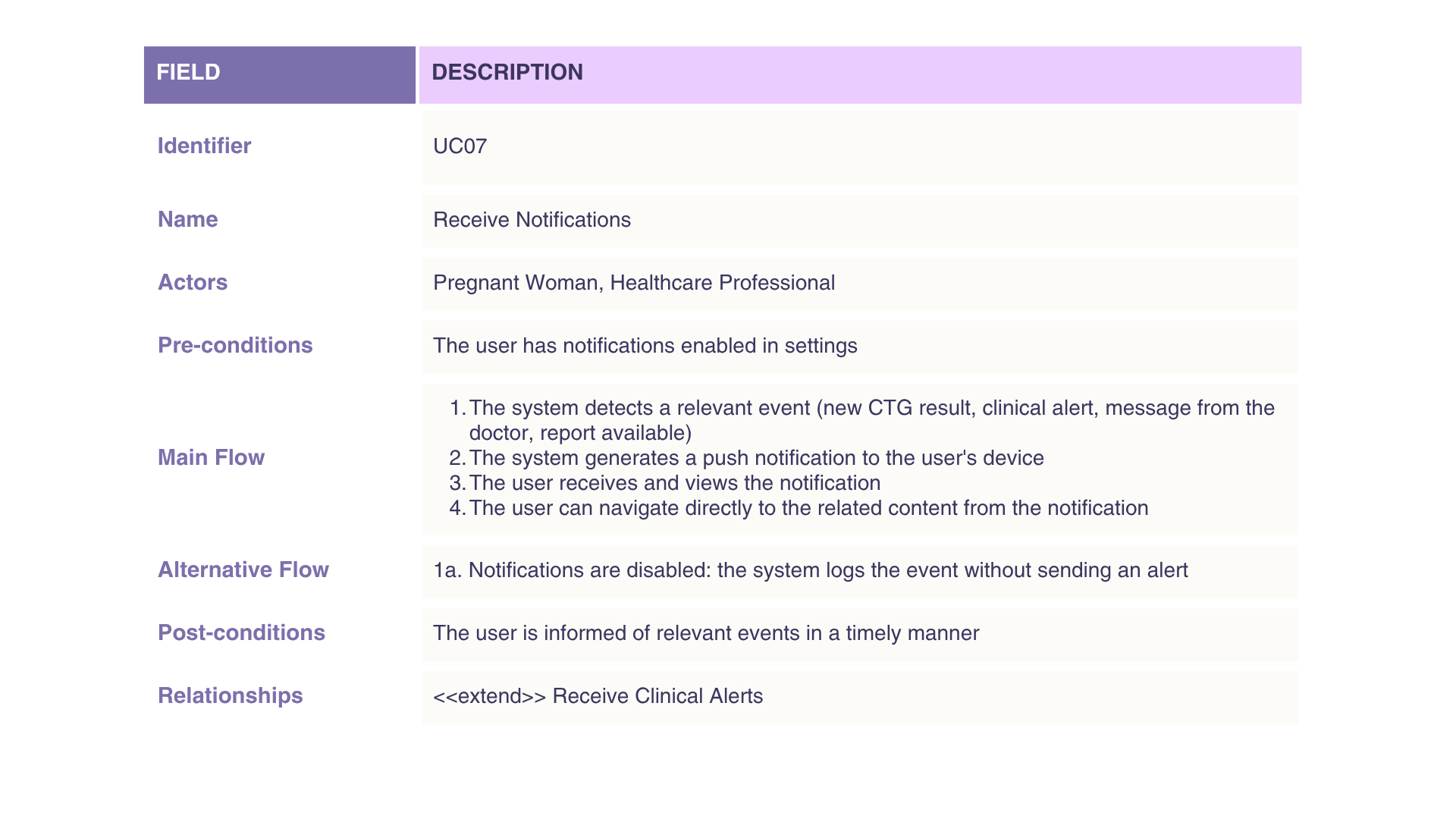
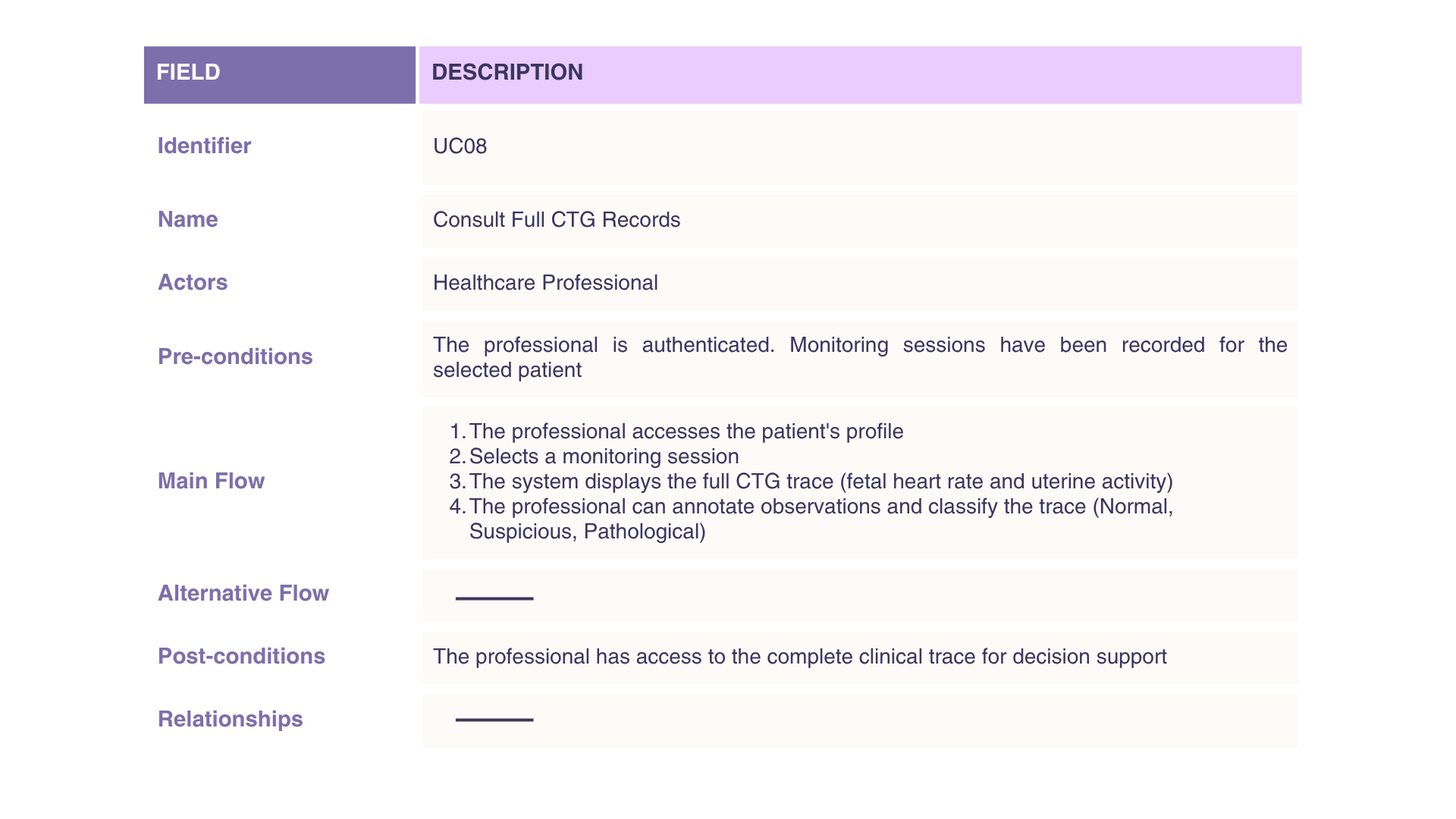
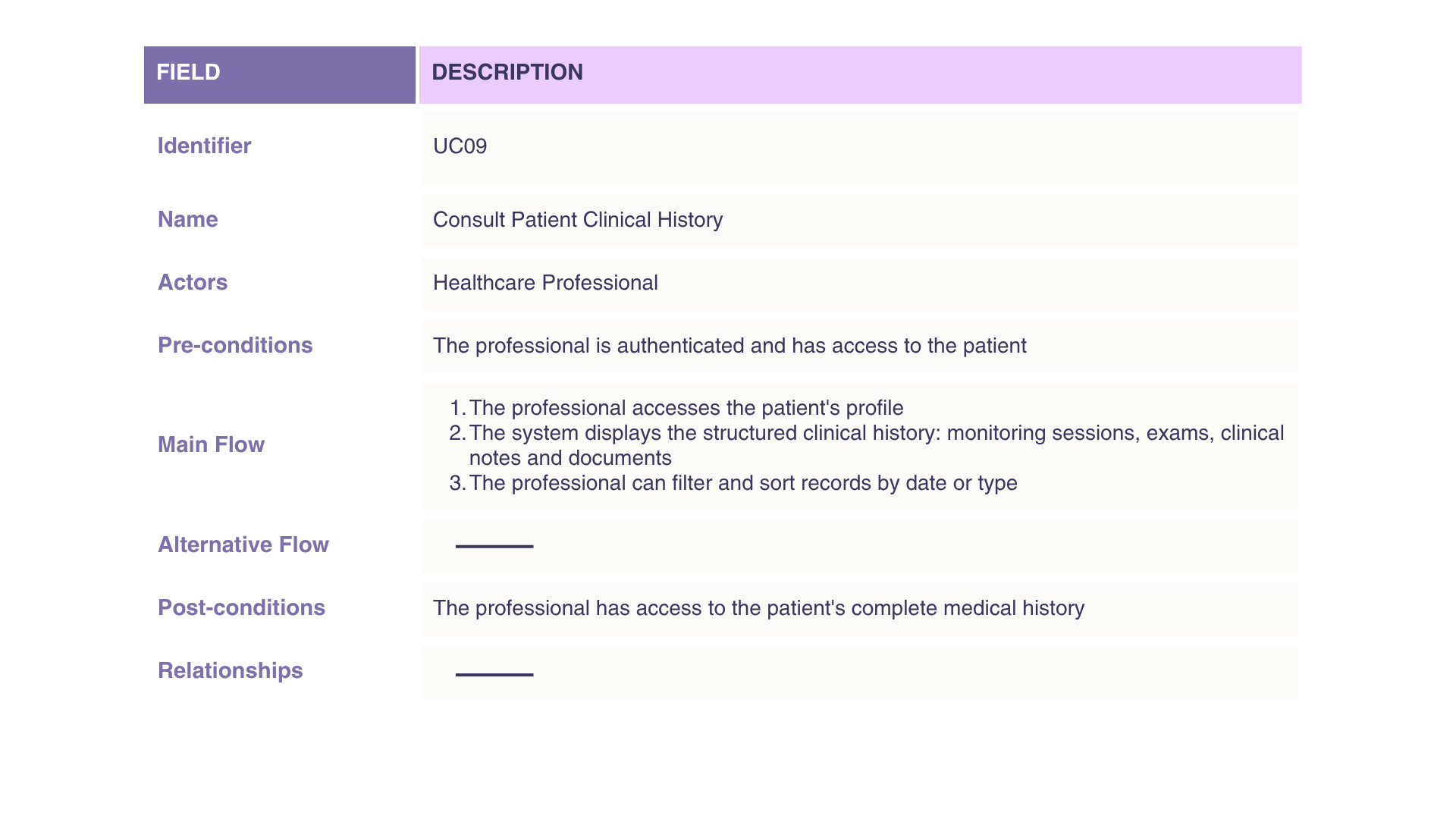
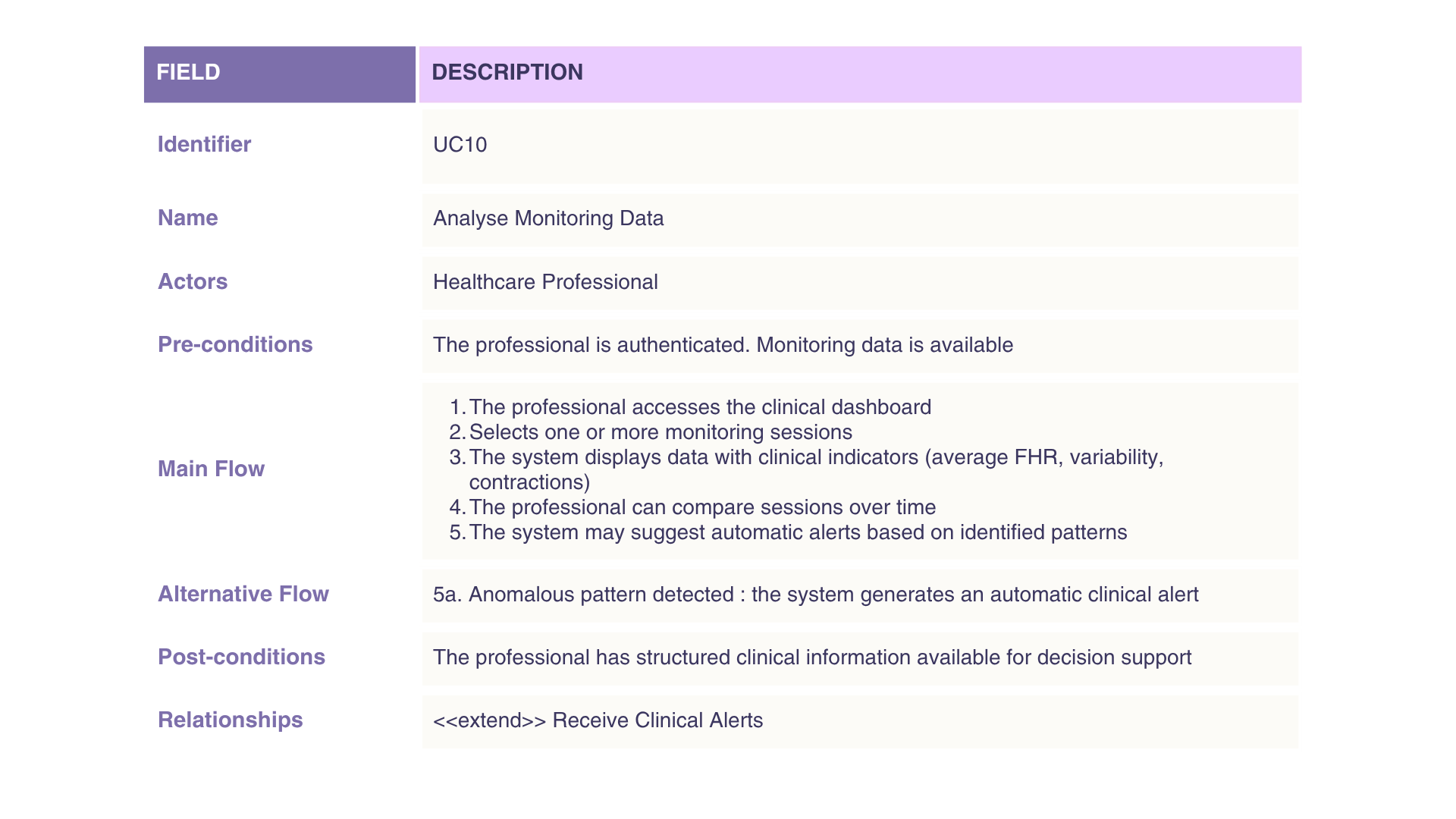
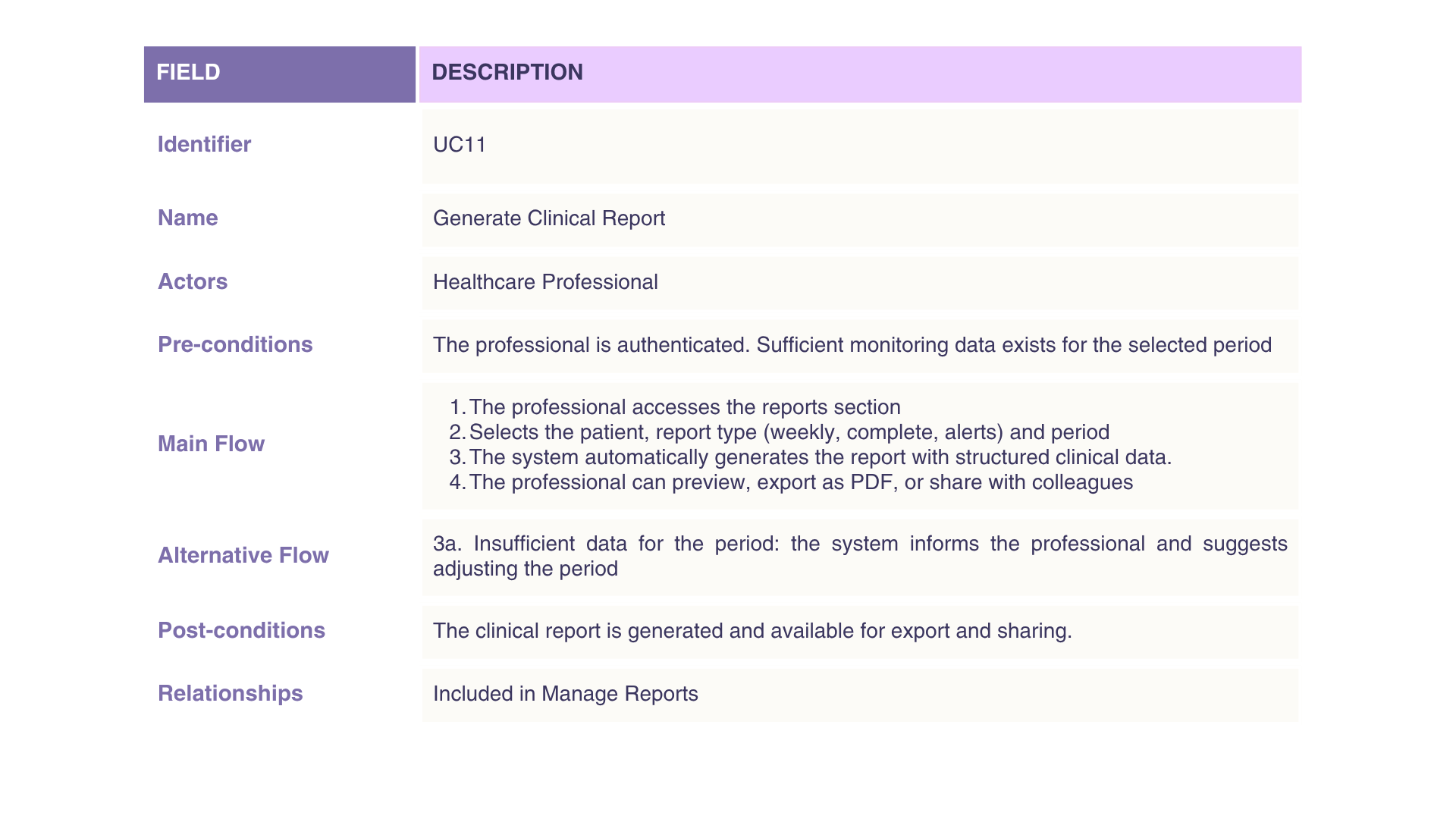
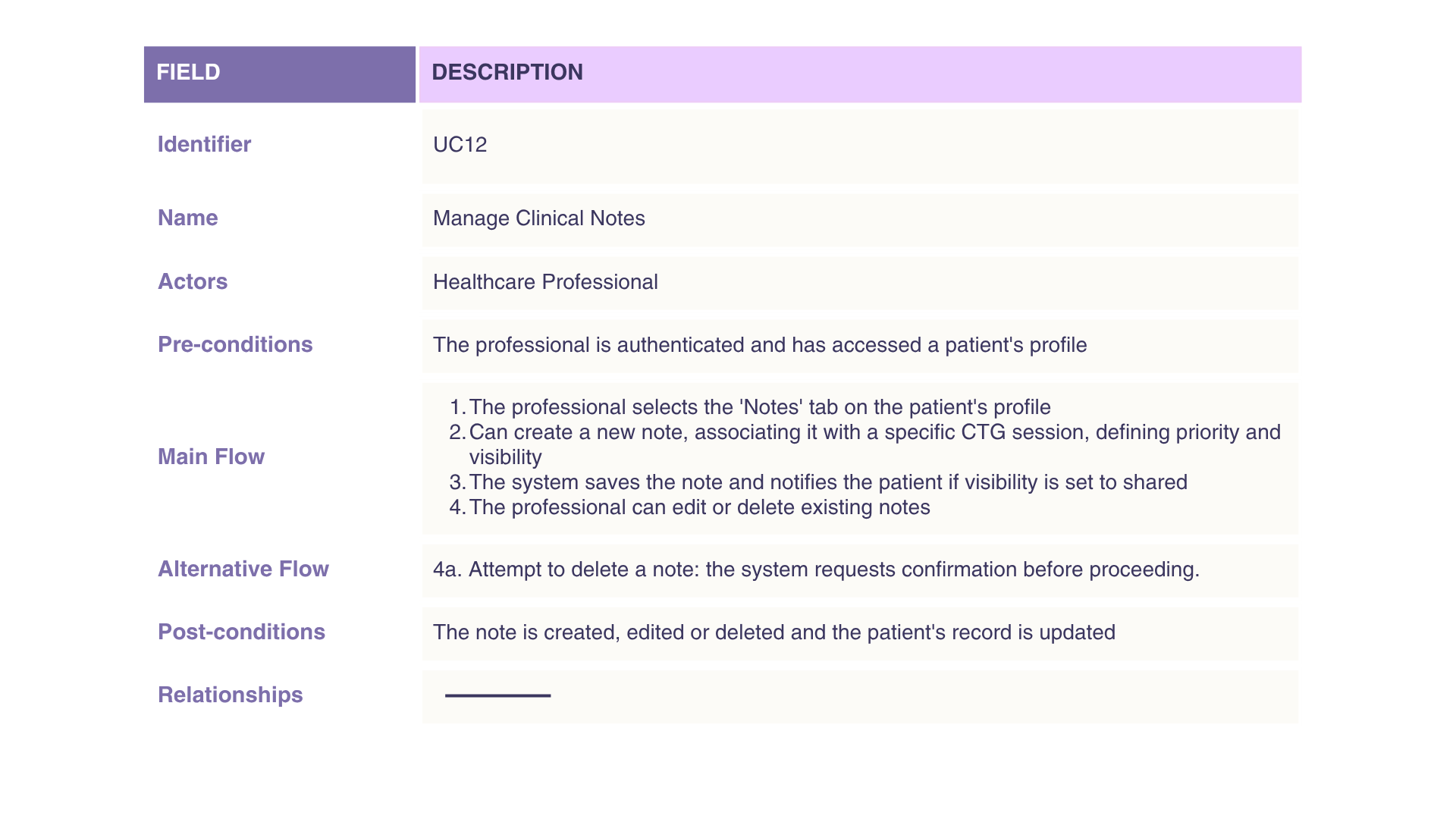
The following tables describe each identified use case in detail, including the primary actor, pre-conditions, main flow of events, alternative flows, and post-conditions.
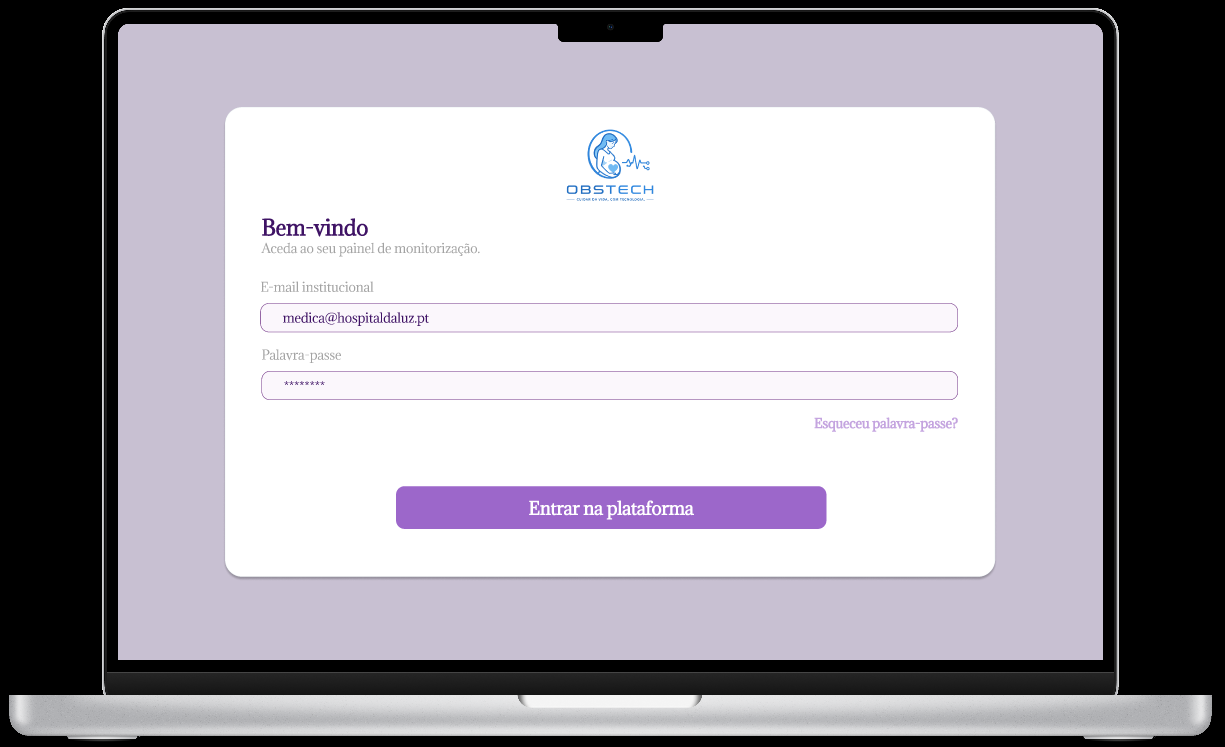
UC01 - Log In
UC02 - Perform CTG Monitoring
UC03 - View CTG Exam Summary
UC04 - View Monitoring History
UC05 - Track Pregnancy Progress
UC06 - Consult Digital Pregnancy Booklet
UC07 – Receive Notifications
UC08 – Consult Full CTG Records
UC09 – Consult Patient Clinical History
UC10 – Analyse Monitoring Data
UC11 – Generate Clinical Report
UC12 – Manage Clinical Notes
UC13 – Contact Patient

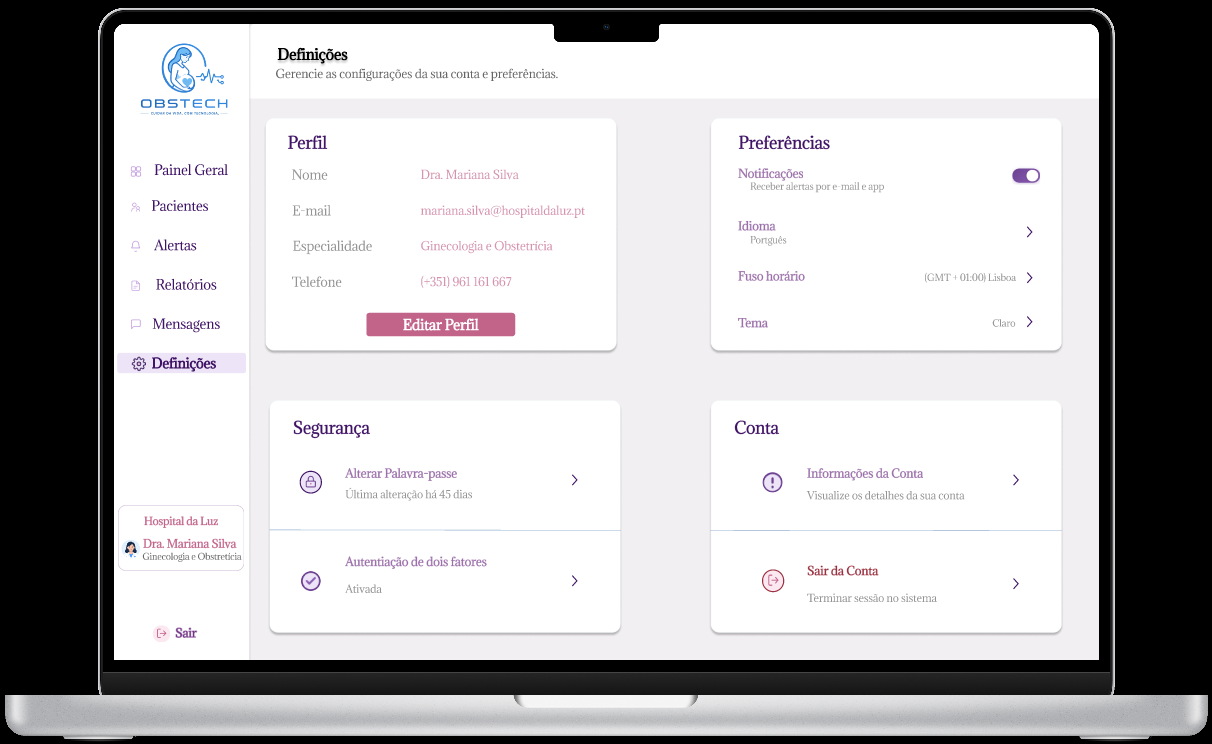
UC14 – Manage Profile and Settings

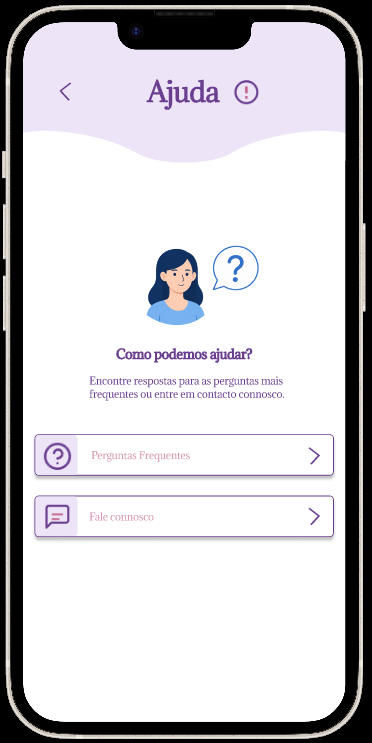
UC15 – Consult Help and Support

UC16 – Acquire and Transmit CTG Signals (Device)

UC17 – Manage Users (Administrator)

3.5 Activity Diagrams
4. Design and Functionalities
4.1 Mockup Building - CONFIRMAR COM FIGMA + COLOCAR FOTOS!!!
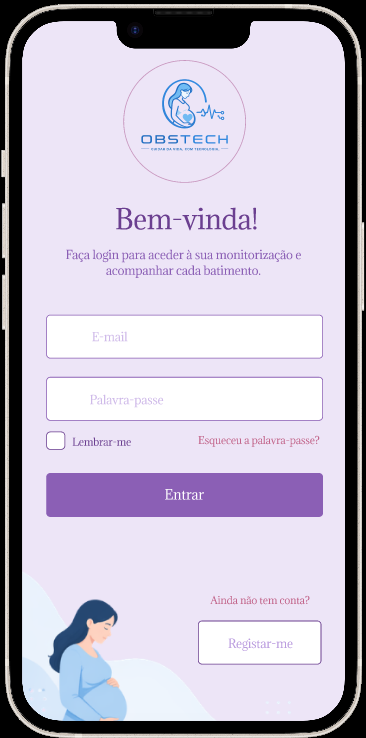
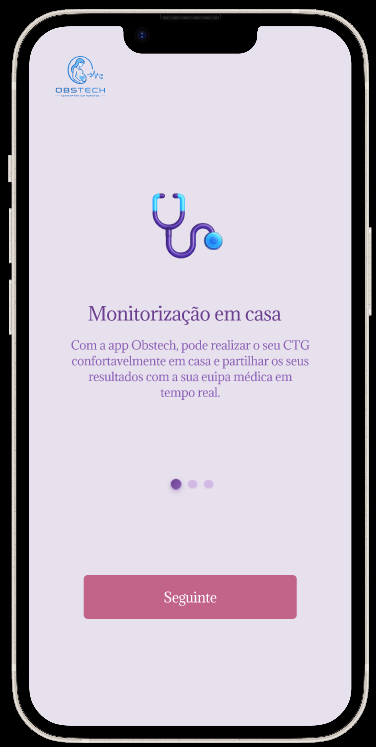
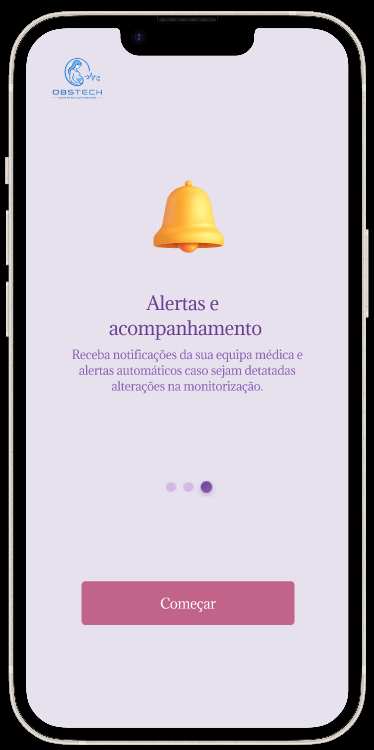
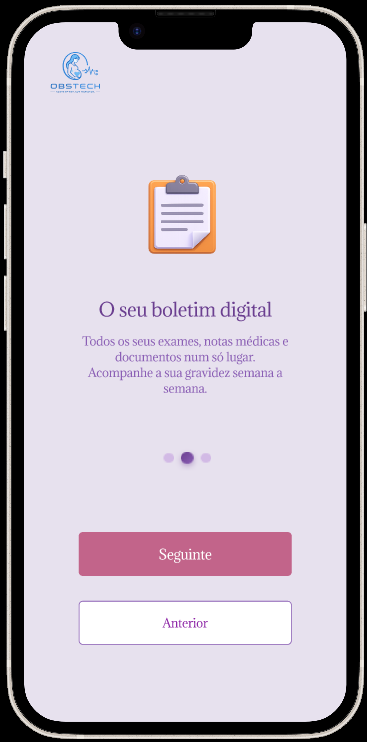
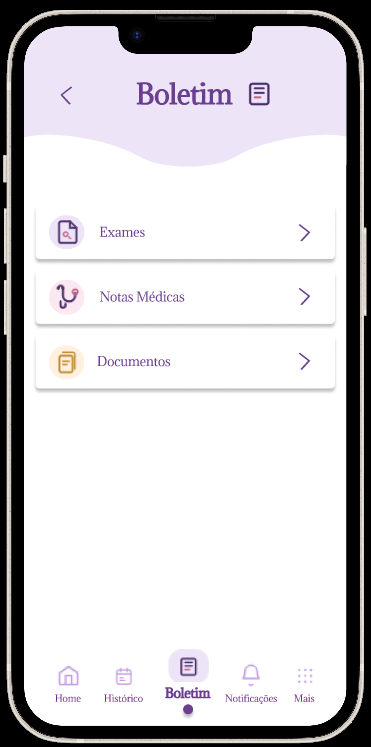
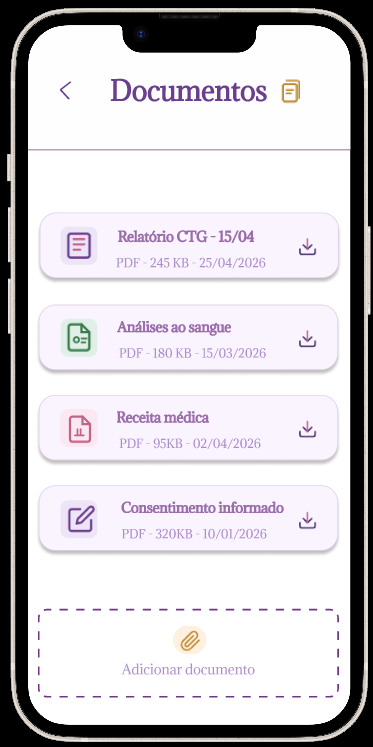
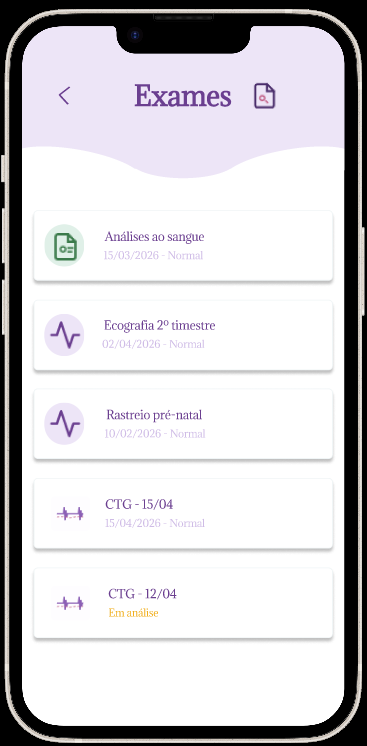
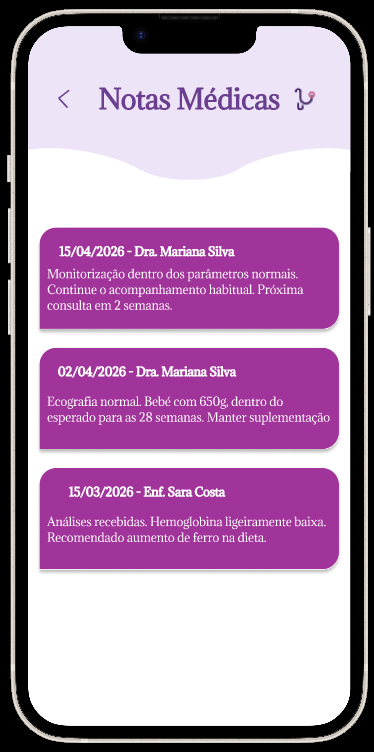
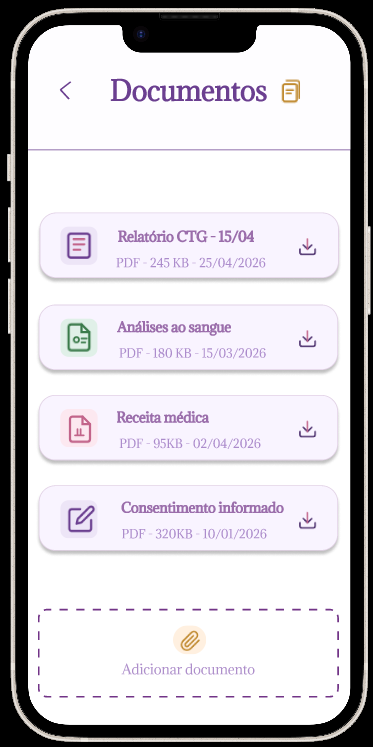
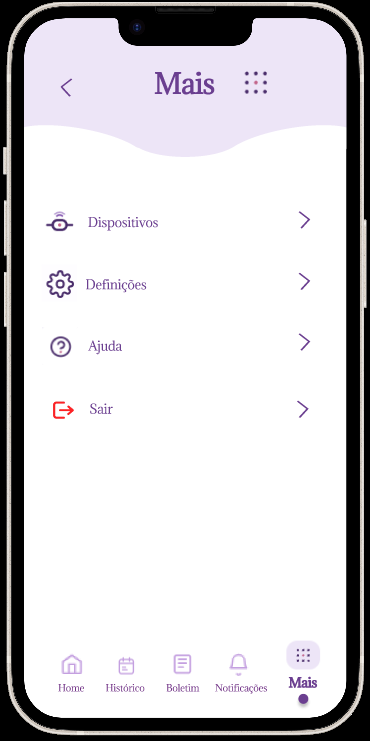
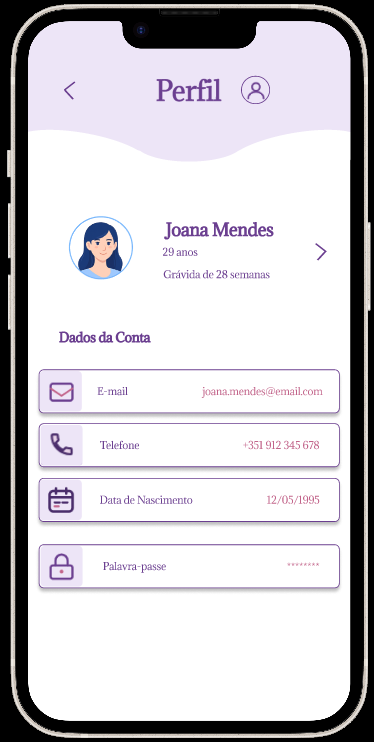
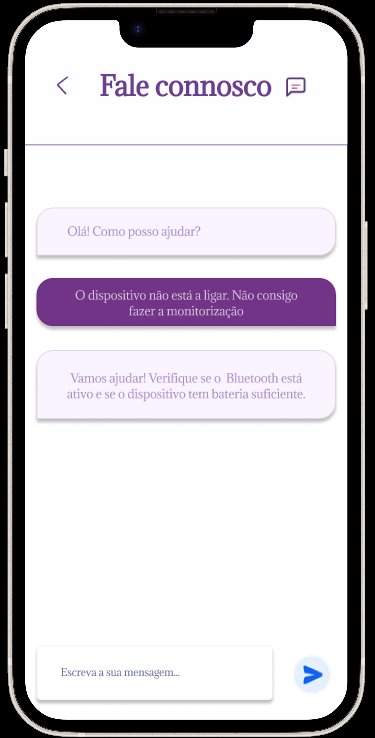
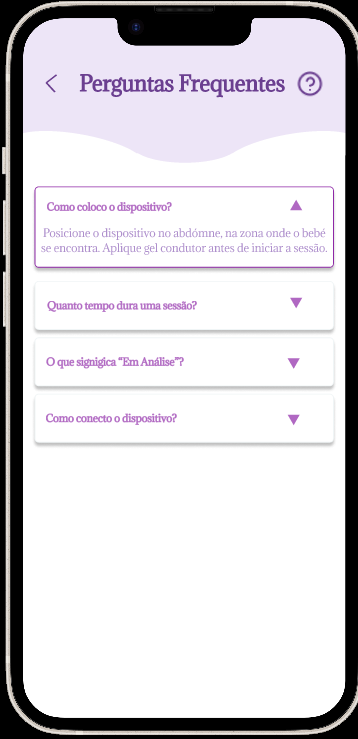
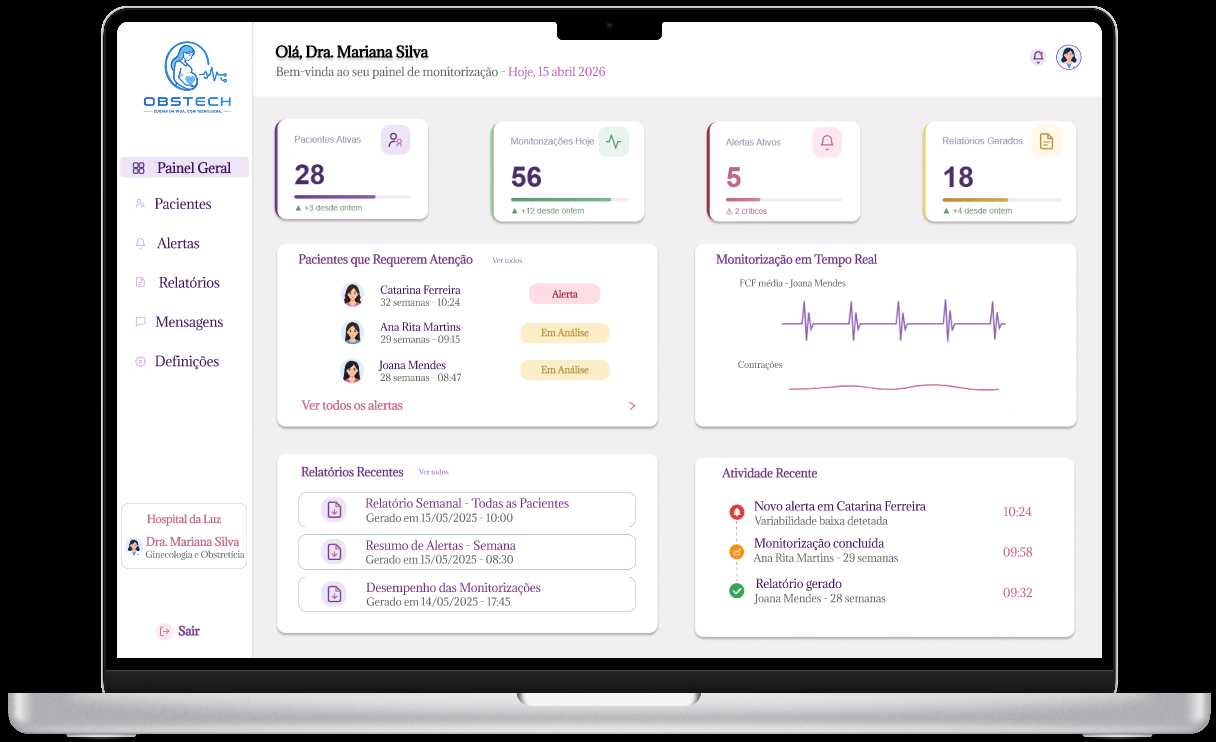
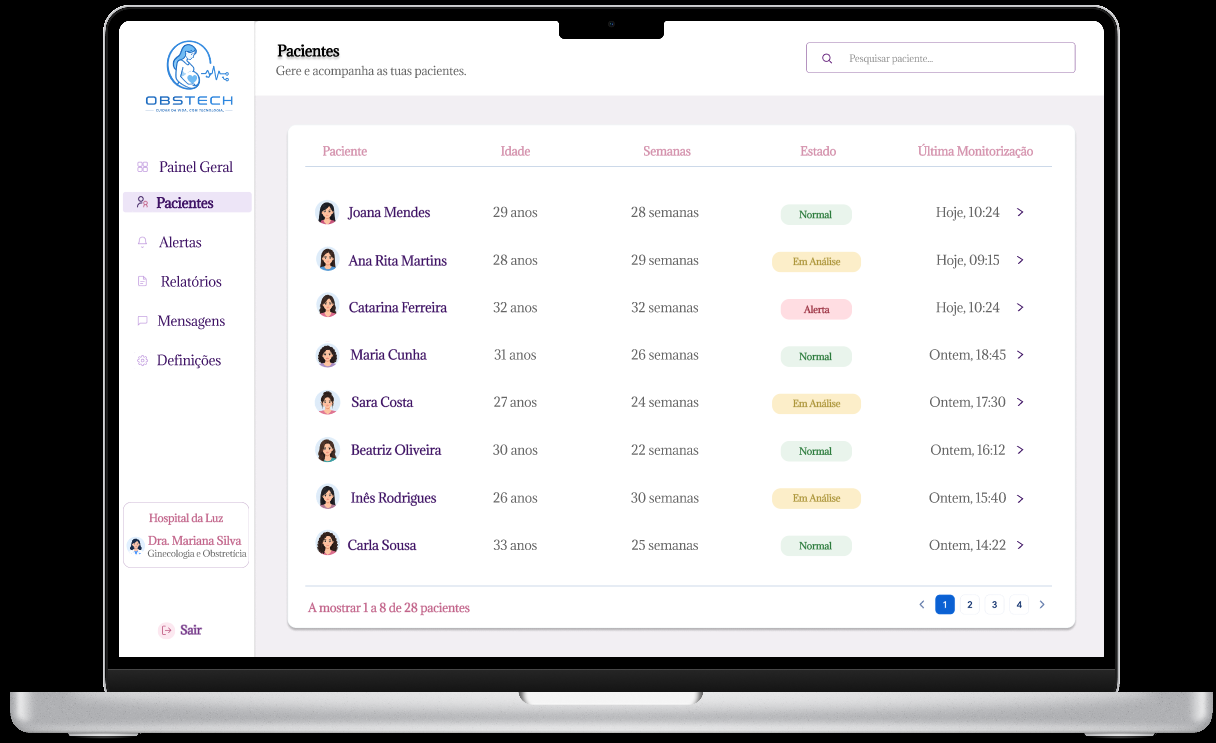
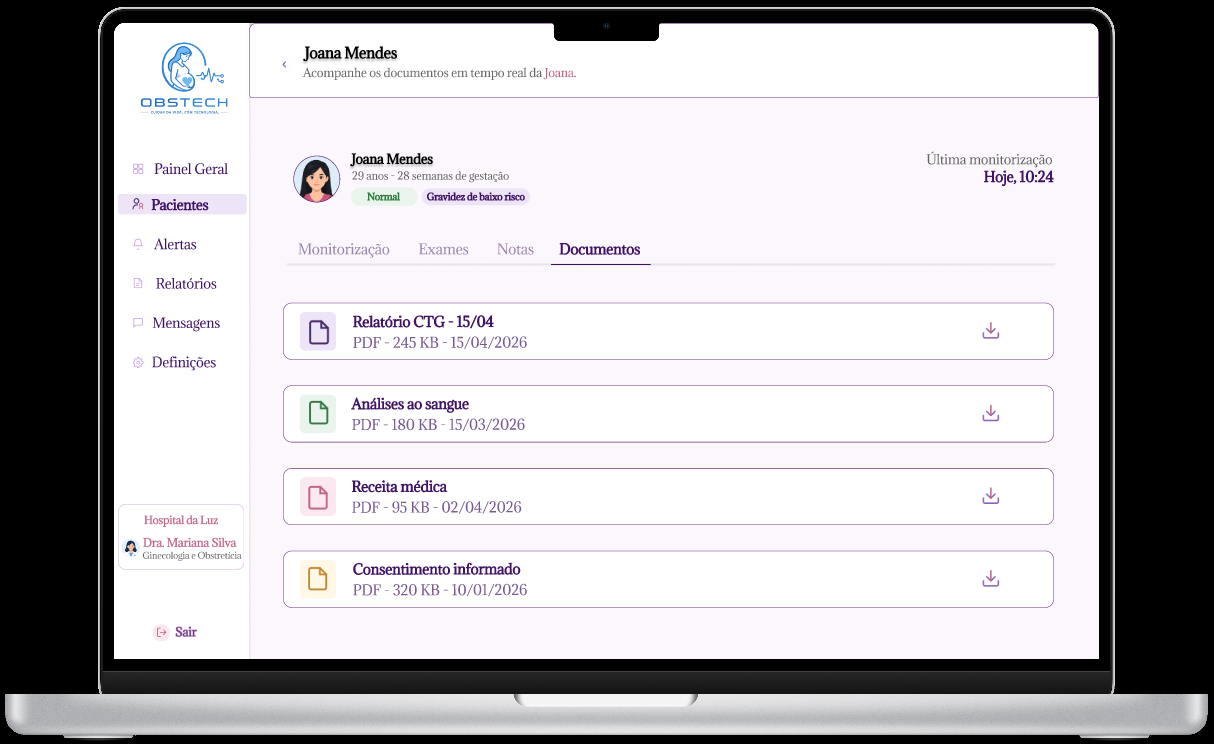
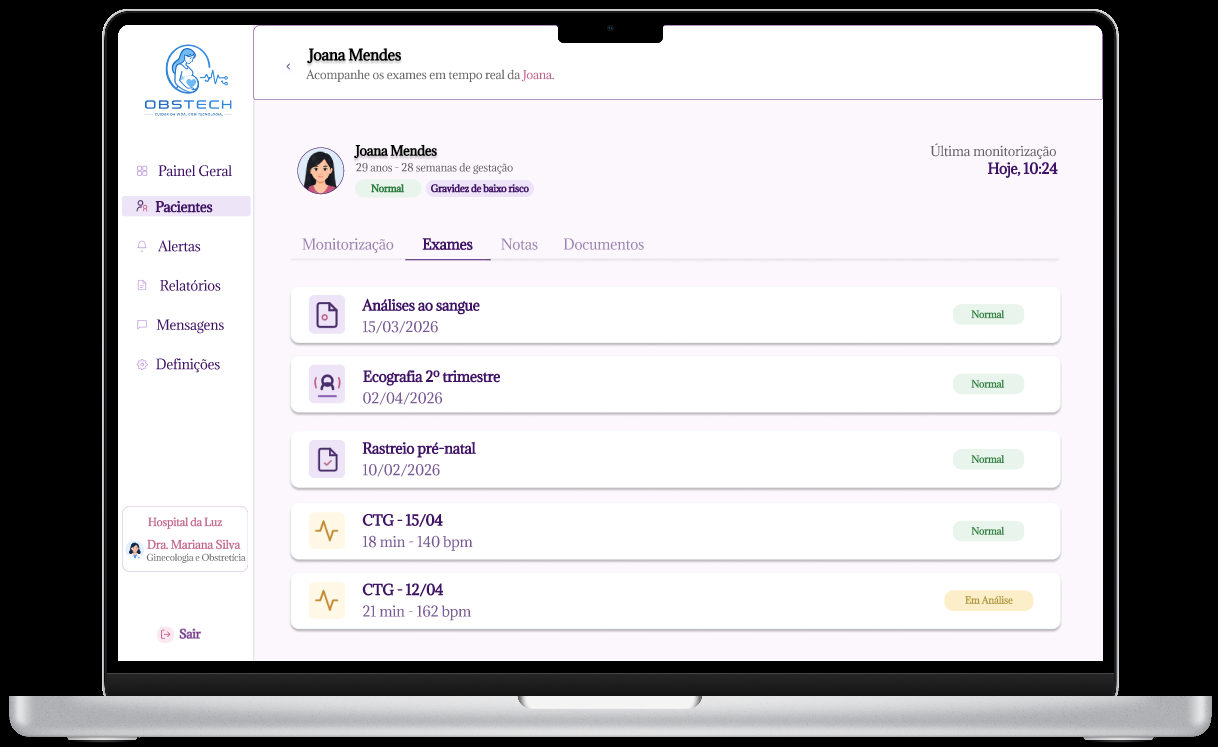
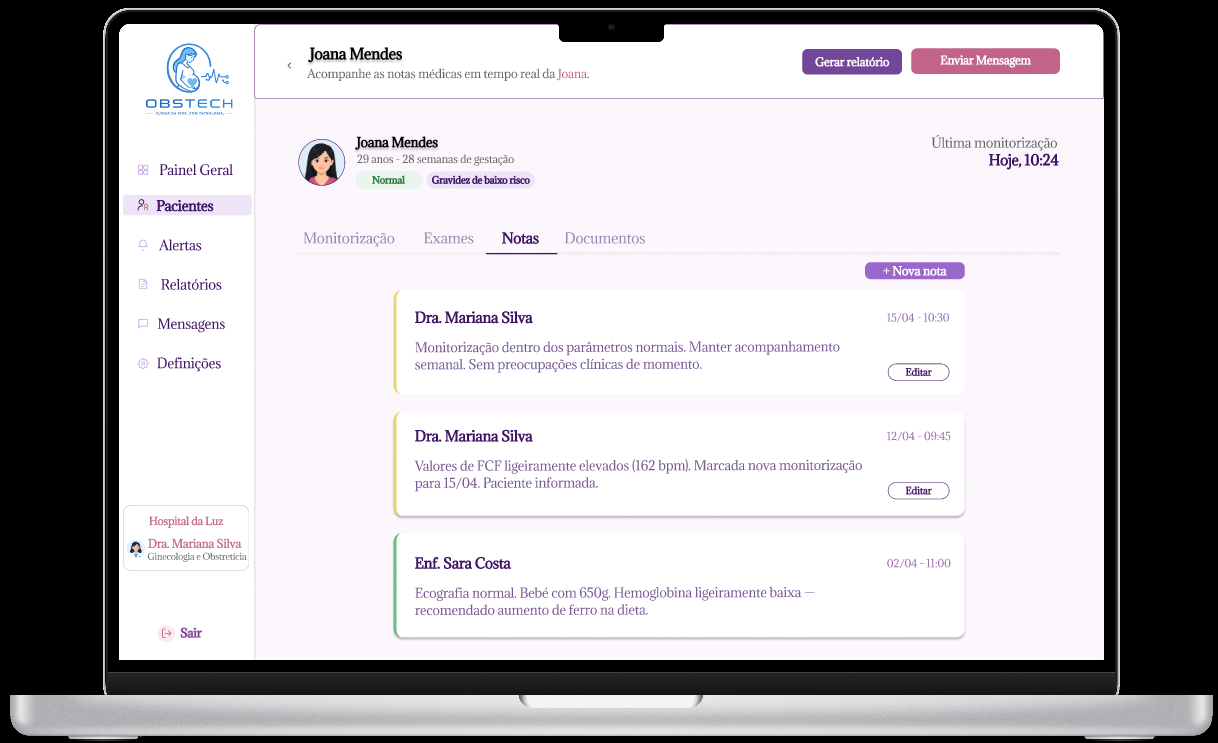
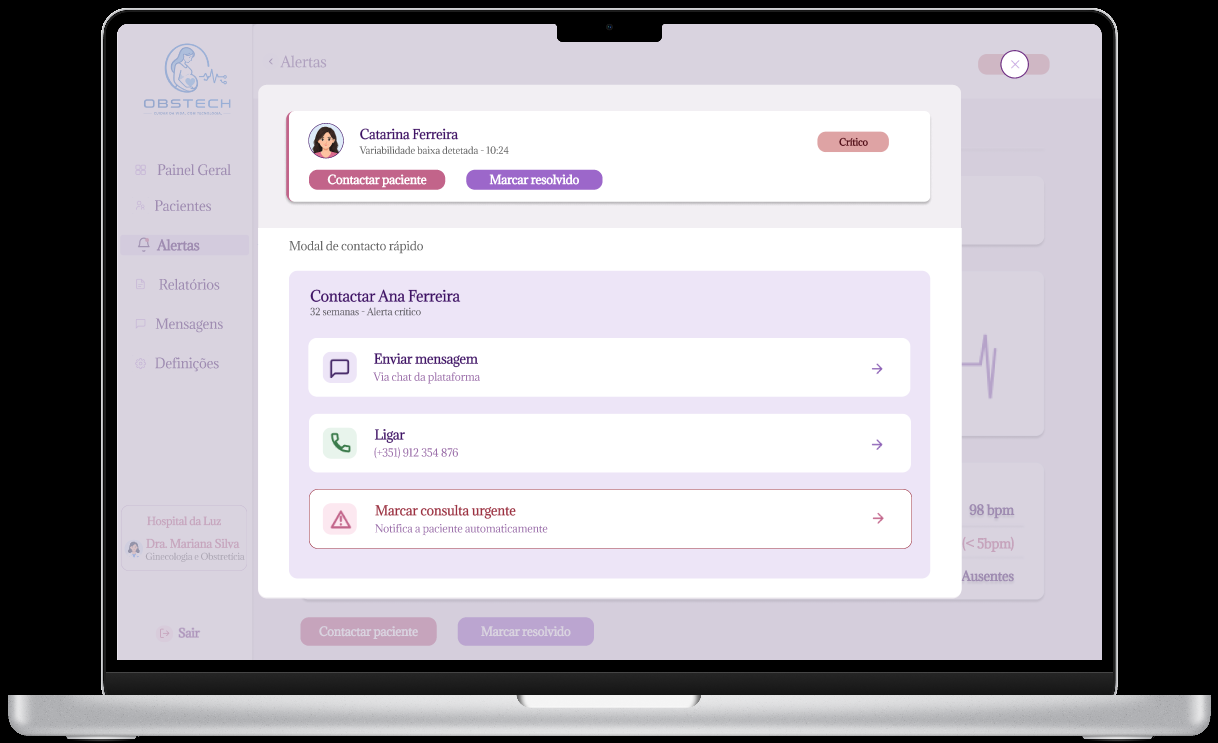
Mockups were developed for both the patient-facing mobile application and the clinician-facing web platform. The design process followed a user-centered approach, with mockup iterations informed by the stakeholder interviews described in Section 3.2.
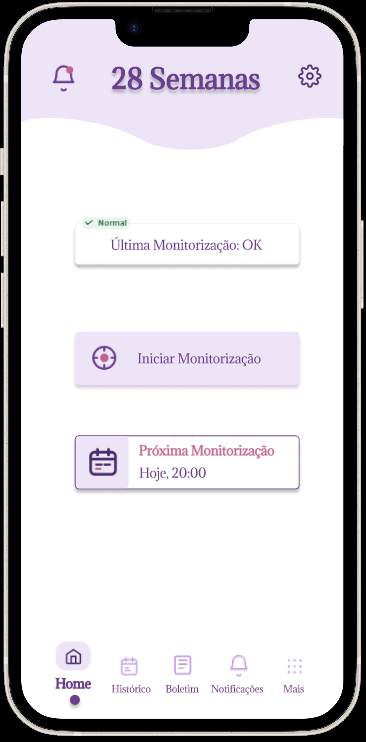
Patient App — Key screens:- Home screen / Dashboard: gestational week, next appointment, quick access to recent CTG result;
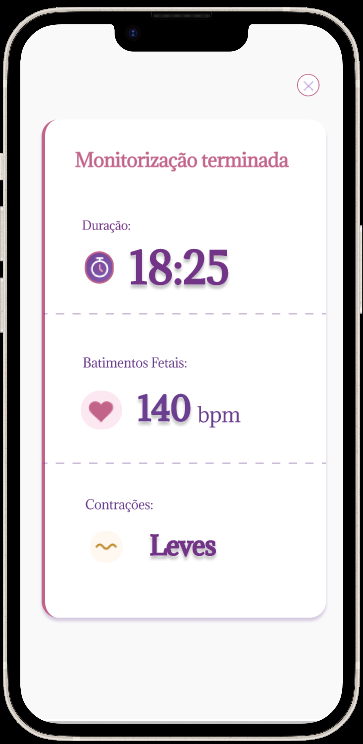
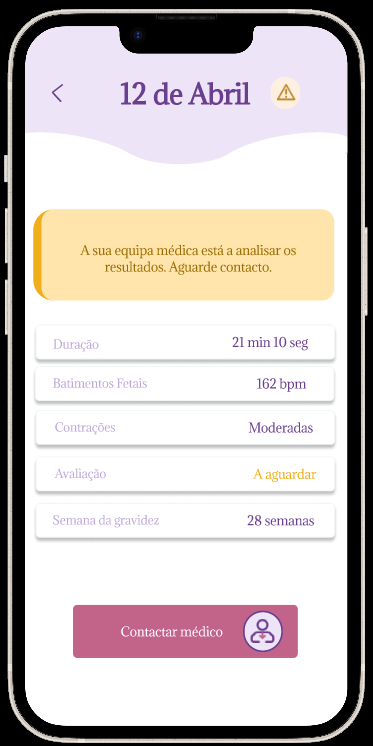
- CTG Result screen: visual summary of last session with plain-language interpretation;
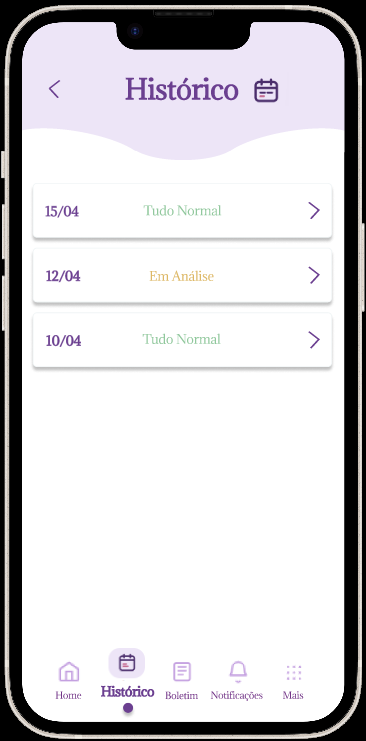
- Pregnancy Booklet: timeline with all exams, results, and clinical notes;
- Notifications: alerts and messages from the clinical team;
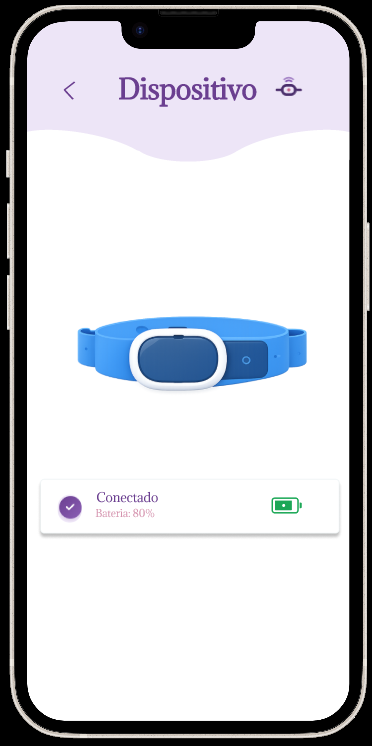
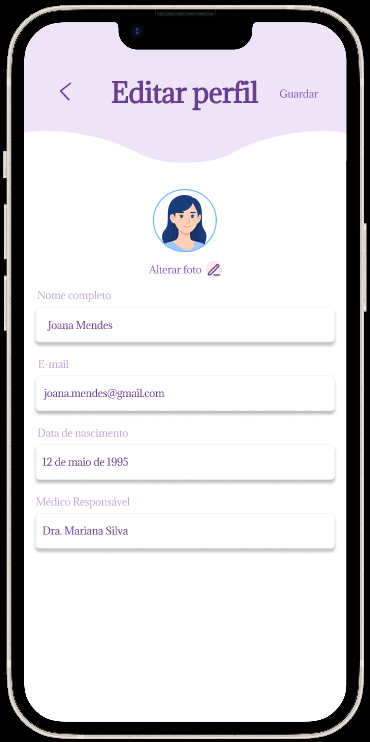
- Profile & Settings: personal data, device pairing, language preferences.
- Patient list dashboard: all monitored patients with status indicators;
- Patient profile: full clinical history, gestational record, device status;
- CTG viewer: interactive trace visualization with annotation tools;
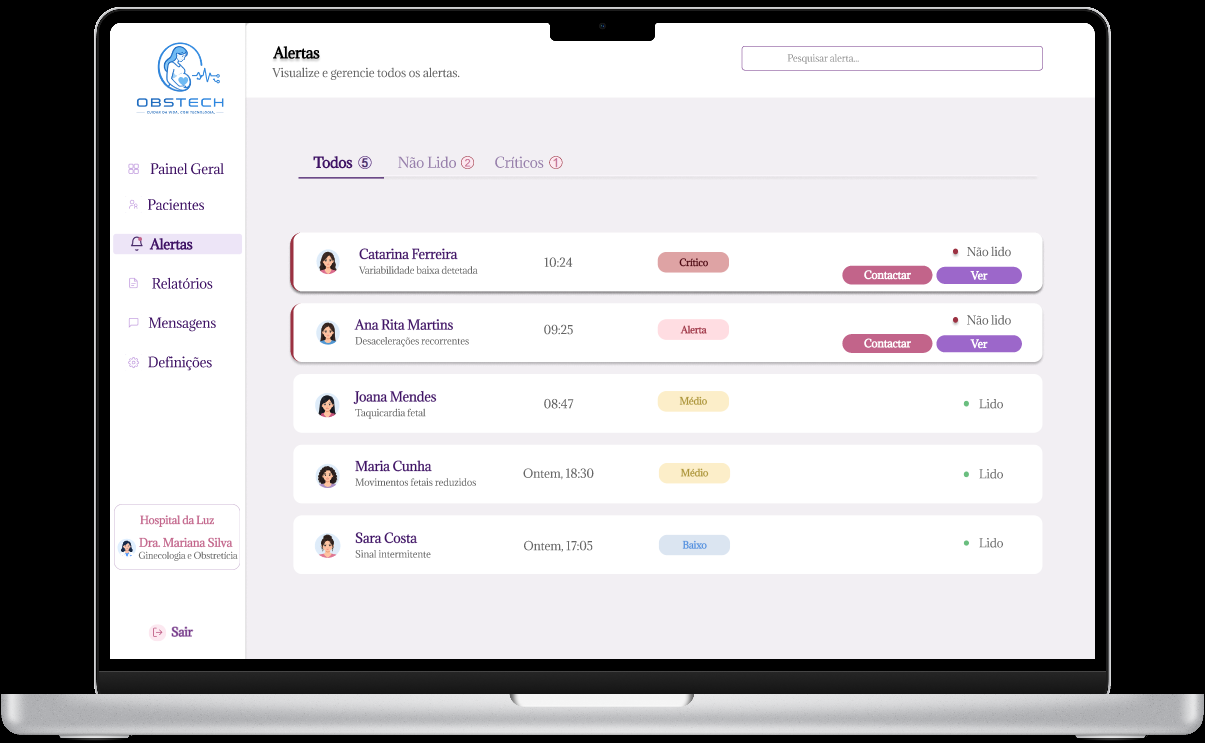
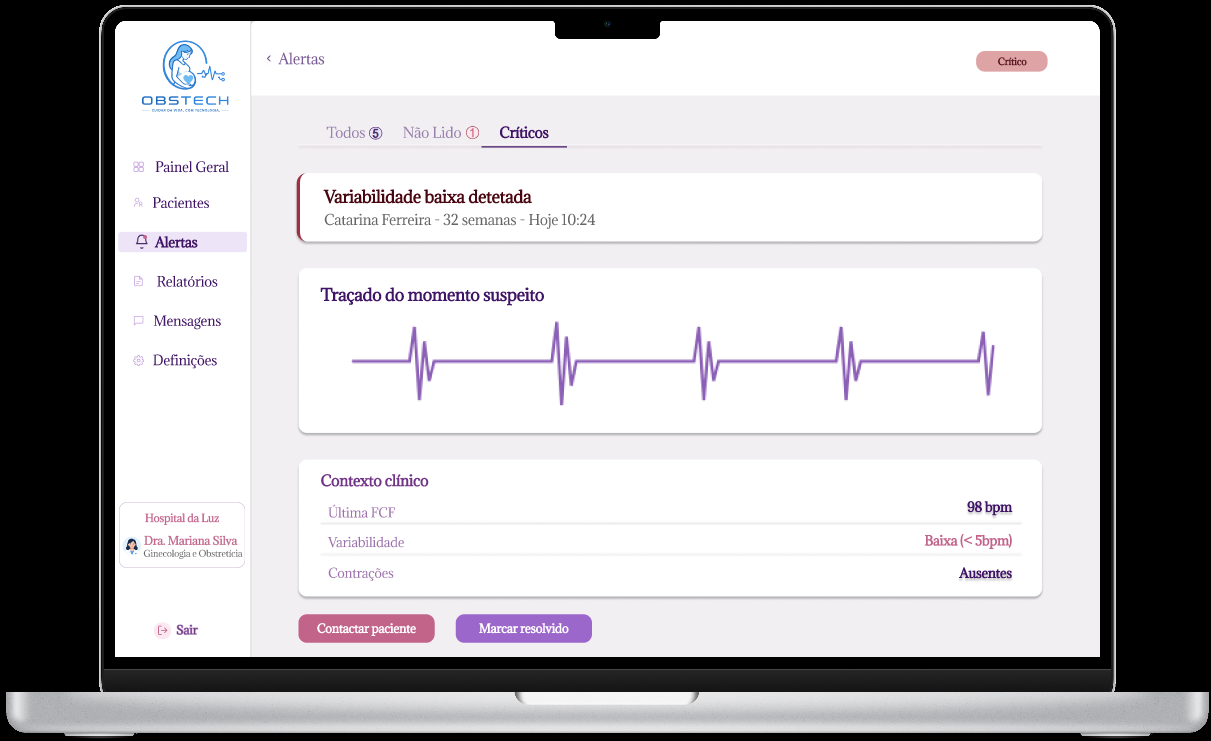
- Alerts panel: flagged events requiring clinical attention;
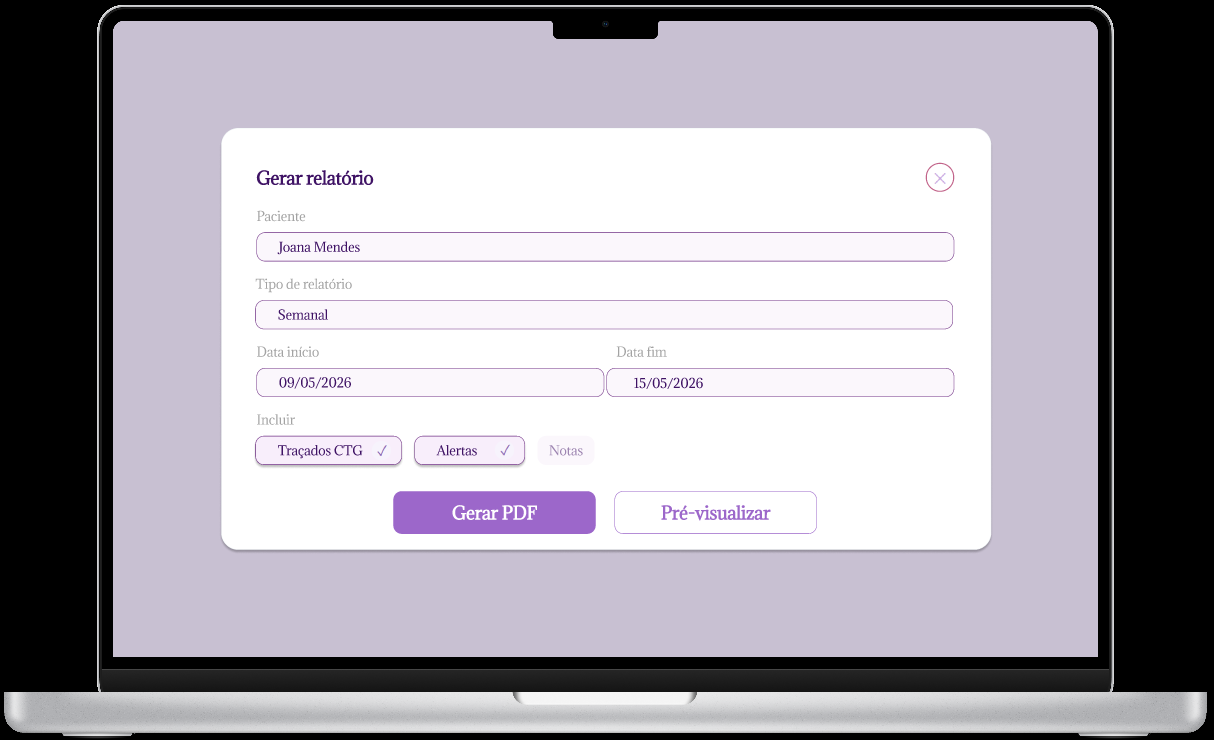
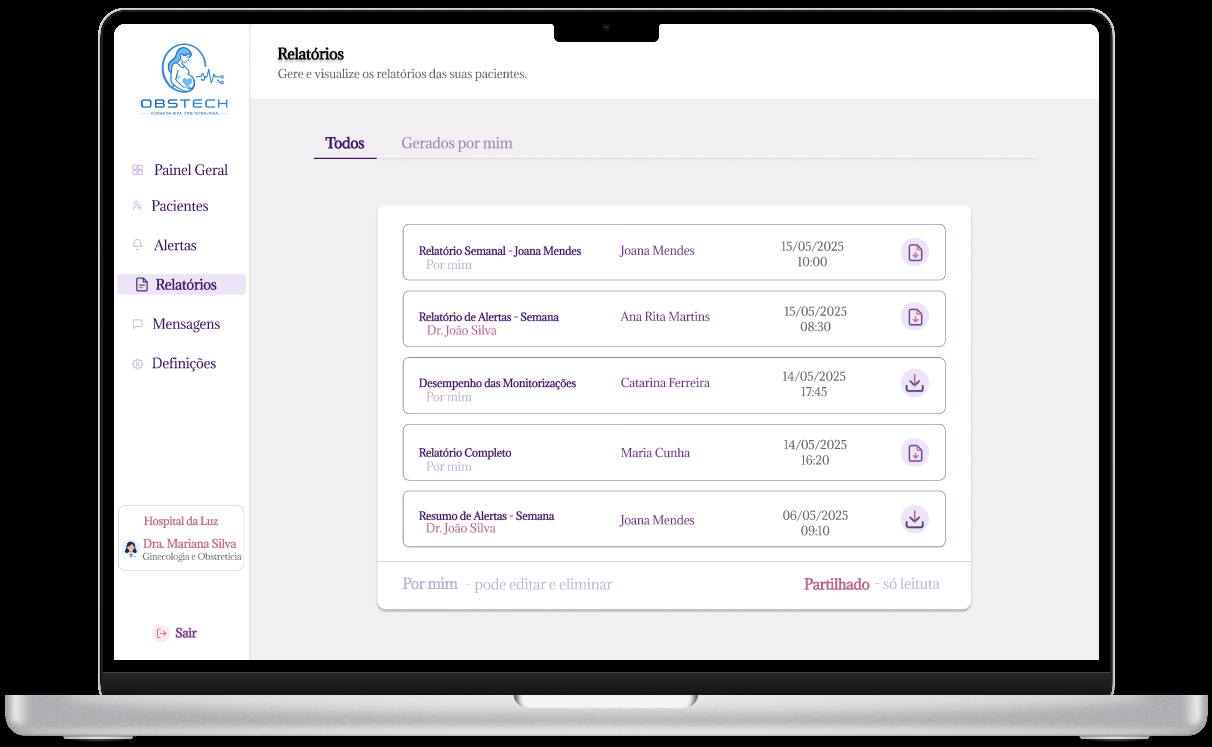
- Reports: generation, preview, and export of clinical reports.
4.2 Device Integration
4.3 Data Consent
5. Implementation
The Obstech prototype is implemented as a web and mobile application connected to a cloud-based backend. The implementation focuses on demonstrating the core user flows identified in the use cases, with emphasis on the patient and clinical interfaces.
Planned technology stack:
ADICIONAR PONTOS!!
6. Project Management
Project management for Obstech – Tele-CTG is conducted using Redmine, the project management platform designated for this course. All tasks, milestones, and team assignments are tracked through Redmine issues and sprints.
Project structure:- Milestone 1 – State of the Art Review: literature review and competitive analysis;
- Milestone 2 – Stakeholder Interviews: planning, conducting, and analyzing interviews;
- Milestone 3 – Requirements & Use Cases: requirements specification and UML diagrams;
- Milestone 4 – Mockup Design: wireframes and interactive mockups for both interfaces;
- Milestone 5 – Prototype Implementation: technical development of the prototype;
- Milestone 6 – Report & Presentation: final report writing and presentation preparation.
7. Problems/Difficulties
8. Conclusions
The Obstech – Tele-CTG project addresses a real and well-documented clinical gap: the absence of a home-based CTG monitoring solution that combines clinical-grade data quality, a meaningful patient experience, and seamless integration with the healthcare team.
The market assessment confirmed that existing solutions are polarized between high-precision hospital systems and accessible but clinically limited home devices. Obstech's hybrid model occupies a strategic position that bridges these two extremes, offering full CTG monitoring at home with a dual interface designed for both pregnant women and healthcare professionals.
9. Future Work
10. Hyperlinks for App Mockup
Interactive mockups for both the patient application and the clinical platform are available for review through the following links:
Patient App Mockup (Figma): https://www.figma.com/proto/znMYyLlW8g8Ft4tuAYhP5a/A-equipe-de-up202502464-team-library?node-id=3312-2&t=RihzMLqr8VuII7PF-1
Clinical Platform Mockup (Figma): https://www.figma.com/proto/znMYyLlW8g8Ft4tuAYhP5a/A-equipe-de-up202502464-team-library?node-id=3410-1307&p=f&t=sKPc6qg4GZ0flH44-1&scaling=scale-down&content-scaling=fixed&page-id=3397%3A621&starting-point-node-id=3410%3A1307&show-proto-sidebar=1
Prototype Demo: INSERIR LINK!!
11. Teaser
Obstech – Tele-CTG reimagines how pregnancy monitoring works. Instead of repeated hospital visits for routine CTG exams, pregnant women use a simple wearable device at home, and their clinical team gets the data instantly.
For the pregnant woman: a clear, reassuring app that shows her CTG results in plain language, tracks her pregnancy week by week, and keeps everything in one place: her digital pregnancy booklet.
For the healthcare team: a powerful clinical platform with full CTG traces, patient history, automated reports, and real-time alerts, everything needed to monitor patients remotely without compromising clinical quality.
Obstech is the bridge between the hospital and the home.
12. Presentation
The final presentation of Obstech – Tele-CTG will cover the following topics:
ADICIONAR PONTOS
References
The following scientific articles were reviewed as part of the state-of-the-art analysis: